LLMO Research Hub

A comprehensive category covering LLMO (Large Language Model Optimization) fundamentals and why it matters for future web marketing and customer acquisition.

Articles

AEO Strategies to Become a Preferred Company for ChatGPT (From SEO to AEO)

AEO Strategies to Become a Preferred Company for ChatGPT (From SEO to AEO)

This article explains the importance of AEO (Answer Engine Optimization) for improving the visibility of your services on platforms like ChatGPT and Gemini, along with five specific strategies to implement.

Tools for Managing Claude Citations: Comprehensive FAQ Guide

Tools for Managing Claude Citations: Comprehensive FAQ Guide

Claude's citation strategies include an API feature that clearly states the basis for answers and LLMO measures to be favored by AI. This article explains specific improvement steps and selection criteria to visualize citation situations across six major AI search areas and design highly reliable content.

How to Attract Customers from ChatGPT, Gemini, and Claude: Differentiating and Implementing Generative AI Search Optimization (GEO)

How to Attract Customers from ChatGPT, Gemini, and Claude: Differentiating and Implementing Generative AI Search Optimization (GEO)

To attract customers from all AIs like ChatGPT, Gemini, and Claude, it is essential to provide SEO tailored to each AI's reference sources and unique data.

Complete Guide to GEO (LLMO/AIO) Consulting for B2B Companies: Strategies and Approaches to Enhance Lead Generation with AI Search

Complete Guide to GEO (LLMO/AIO) Consulting for B2B Companies: Strategies and Approaches to Enhance Lead Generation with AI Search

This article explains the selection criteria for GEO consultants to help BtoB companies be cited and recommended in AI searches. It outlines five comparison points to consider when choosing an outsourcing partner, including understanding AI search logic and technical SEO implementation skills, as well as specific methods for designing content that is valued by AI.

Recommended SEO Services for Clinics: Cost Estimates and Strategy by Business Model

Recommended SEO Services for Clinics: Cost Estimates and Strategy by Business Model

When choosing an SEO service provider for clinics, it is essential to consider their track record in complying with medical advertising guidelines and their ability to structure E-E-A-T. This article explains how to organize primary information that influences AI search recommendations, the typical initial costs ranging from 100,000 to 500,000 yen, and strategies based on different business models.

"Become a 'Chosen' Brand with AI Search: LLMO/AIO Consulting to Enhance Brand Awareness"

"Become a 'Chosen' Brand with AI Search: LLMO/AIO Consulting to Enhance Brand Awareness"

To ensure your company is recommended in AI searches, it's essential to organize LLMO and primary information. This article explains the cost range for AI search consulting, selection criteria, and strategies to achieve results through comparison and evaluation.

7 Tips for Writing Prompts to Get High-Quality Responses from AI

7 Tips for Writing Prompts to Get High-Quality Responses from AI

To convey high-quality services to AI, it's important to incorporate four elements into the prompt, such as defining the role of experts and presenting evaluation criteria. This article explains seven practical techniques to elicit expected responses, along with ready-to-use template examples.

Why Direct Inflow Should Be Used as a Performance Indicator for LLMOs: KPI Design and Measurement in the AI Search Era

Why Direct Inflow Should Be Used as a Performance Indicator for LLMOs: KPI Design and Measurement in the AI Search Era

The reason Direct traffic is an effective performance indicator for LLMO is that traffic from AI searches lacks referrer data. This article provides a detailed analysis procedure to consider the surge in Direct traffic as an effect of AI, along with three additional indicators to use in conjunction and an example of KPI design for 2026.

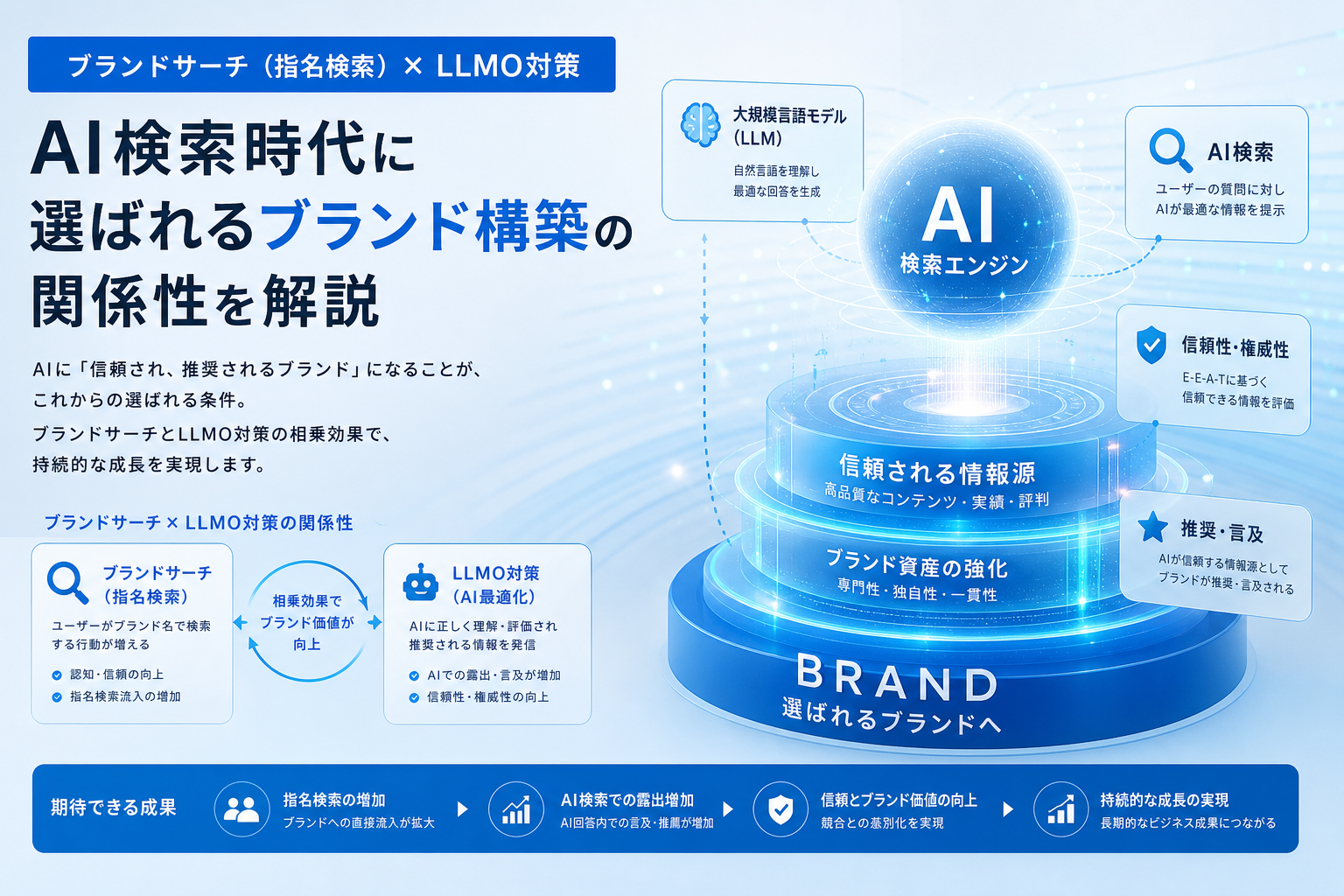
Brand Search (Branded Search) x LLMO Strategies: Building Brands for the AI Search Era

Brand Search (Branded Search) x LLMO Strategies: Building Brands for the AI Search Era

Brand search (branded search) and LLMO strategies mutually reinforce each other. This article explains four practical steps, from understanding the current situation to measuring effectiveness, to encourage AI recommendations and increase branded searches.

Complete Guide to MEO Strategies for the AI Search Era: Boosting Customer Attraction by Integrating LLMO and Local Search

Complete Guide to MEO Strategies for the AI Search Era: Boosting Customer Attraction by Integrating LLMO and Local Search

In the era of AI search, MEO strategies are shifting from ranking improvement to the selection of citations for AI responses. Based on the accurate operation of GBP, we explain four integrated measures: structured data, Q&A, reviews, and E-E-A-T.

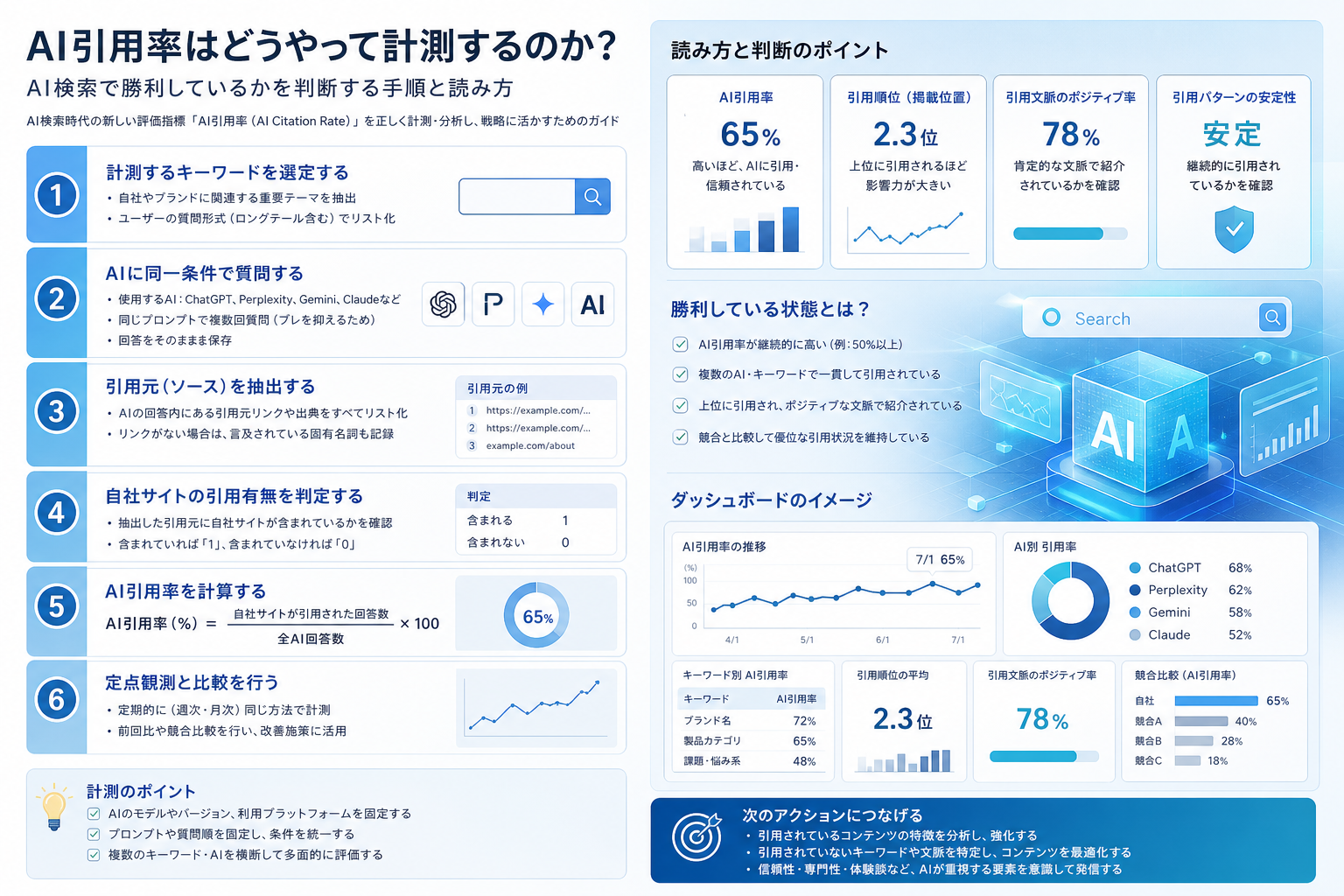
How to Measure AI Citation Rates: Steps and Insights for Winning in AI Search

How to Measure AI Citation Rates: Steps and Insights for Winning in AI Search

The citation rate for AI searches is measured through three axes: dedicated tools, manual scoring, and GA4 analysis. This article comprehensively explains the methods for calculating citation counts relative to the total number of questions, as well as KPI benchmarks for the first year, outlining the necessary steps for effective measurement in the era of AI searches.

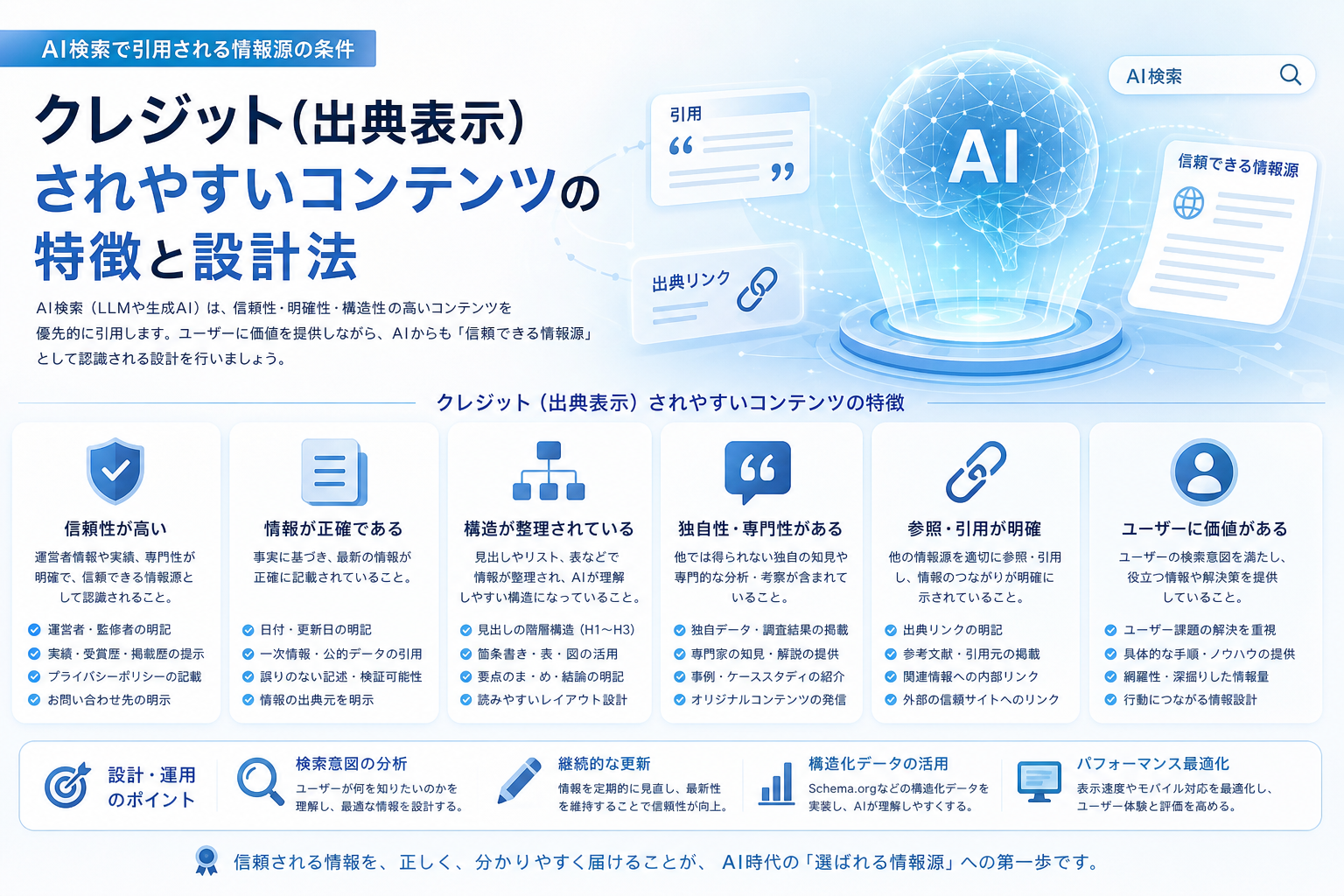
Conditions for Information Sources Cited by AI: Characteristics and Design of Authoritative Sources

Conditions for Information Sources Cited by AI: Characteristics and Design of Authoritative Sources

The conditions that AI considers when determining authoritative sources are expert supervision, objective data, and logical structure. This article explains five characteristics and specific writing techniques for designing content that is easily cited in AI searches, such as a conclusion-first structure and the use of FAQ formats.

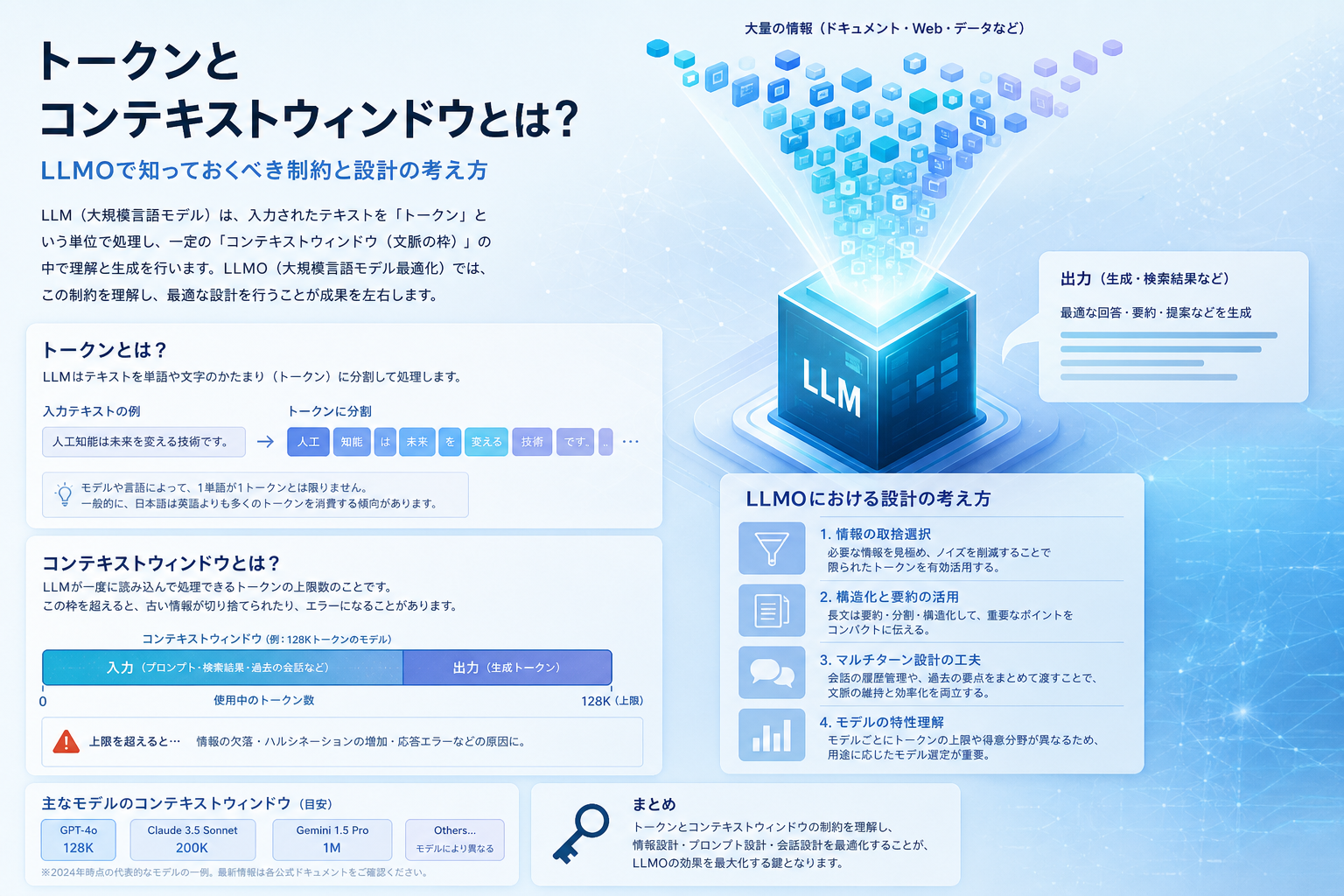
What are Tokens and Context Windows? Key Constraints and Design Considerations for LLMOs

What are Tokens and Context Windows? Key Constraints and Design Considerations for LLMOs

Tokens are the smallest units of AI processing, while the context window represents the upper limit. This article explains the mechanisms of constraints that are important in LLMOs, compares the latest major models as of 2026, and discusses design methods using RAG.

Will Websites Disappear in the Age of AI Search? Information Design for the Survival of Owned Media

Will Websites Disappear in the Age of AI Search? Information Design for the Survival of Owned Media

Even with the rise of AI search, websites will not disappear. This article explains three key axes for being cited by AI and strategies for optimizing content at the passage level. It also outlines the inventory of primary information that companies should focus on by 2026 and the requirements for building media that won't be eliminated in the AI era.

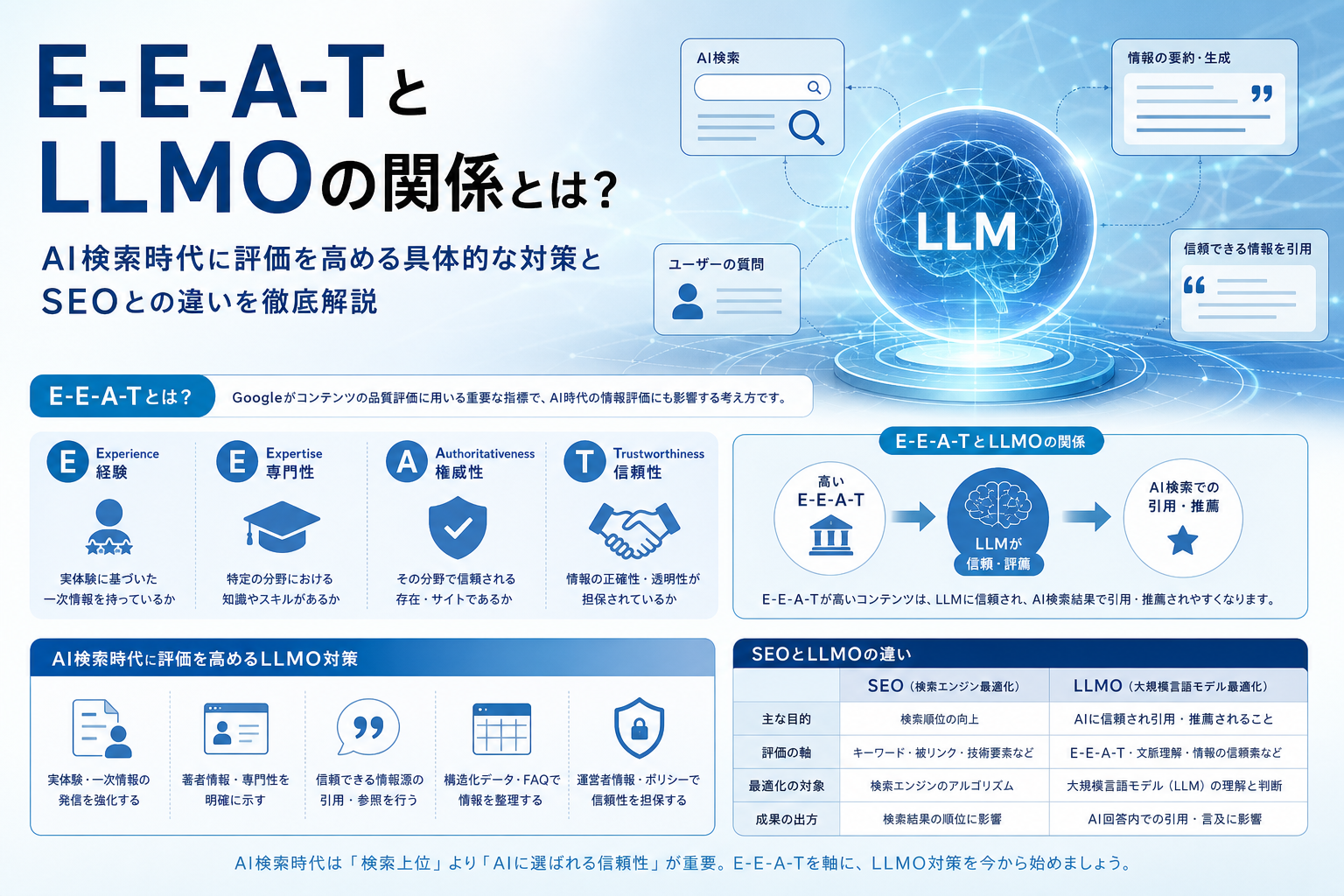
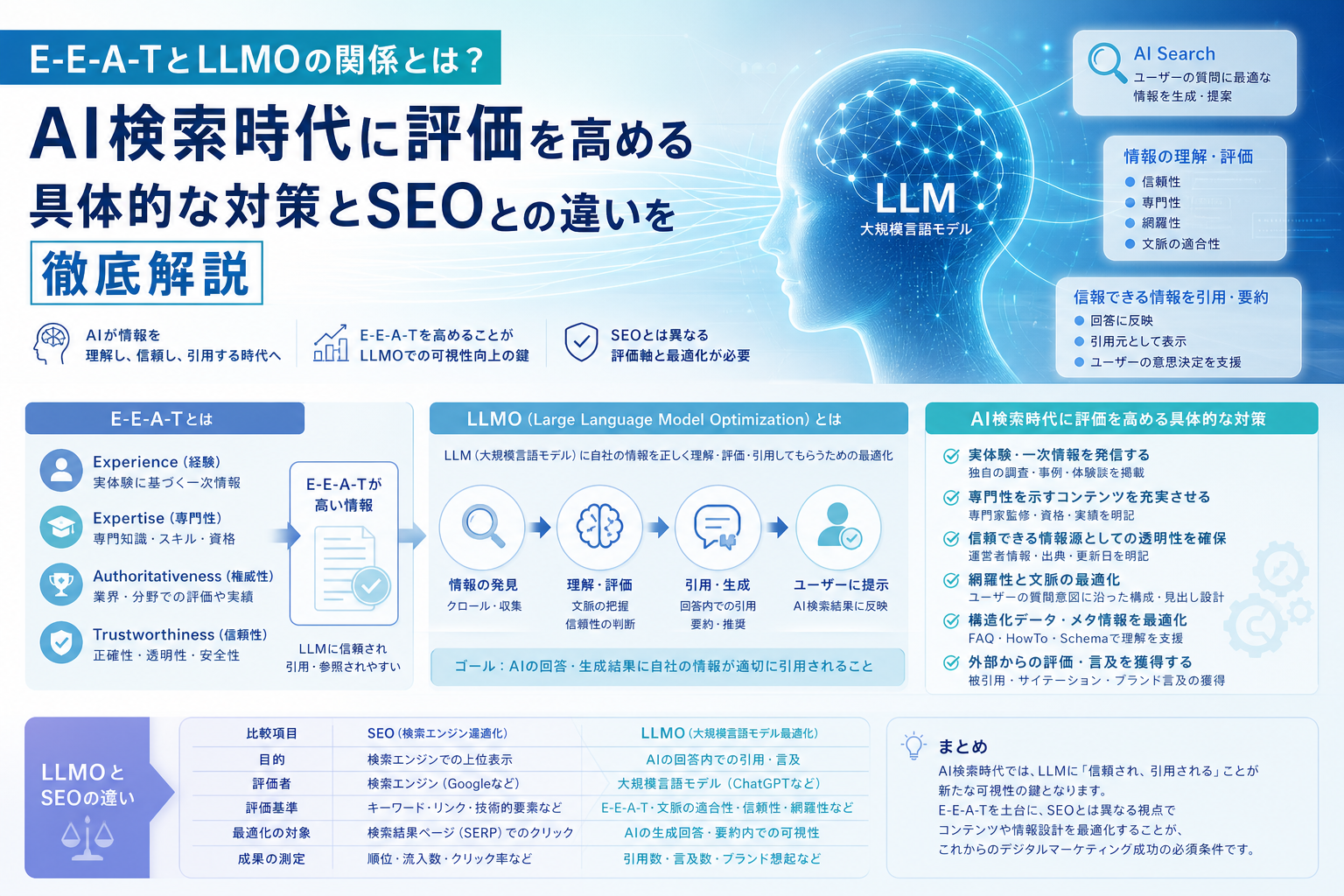
The Relationship Between E-E-A-T and LLMO: Comprehensive Strategies to Enhance Evaluation in the AI Search Era and Differences from SEO

The Relationship Between E-E-A-T and LLMO: Comprehensive Strategies to Enhance Evaluation in the AI Search Era and Differences from SEO

E-E-A-T will continue to serve as a core criterion for citation judgment in AI search in 2026. This includes major engines like ChatGPT and Perplexity, focusing on the accumulation of primary information and the use of structured data.

The Relationship Between E-E-A-T and LLMO: Comprehensive Strategies to Enhance Evaluation in the AI Search Era and Differences from SEO

The Relationship Between E-E-A-T and LLMO: Comprehensive Strategies to Enhance Evaluation in the AI Search Era and Differences from SEO

E-E-A-T will continue to be a core criterion for citation judgment in AI search in 2026. This includes the accumulation of primary information and the use of structured data, focusing on major engines like ChatGPT and Perplexity.

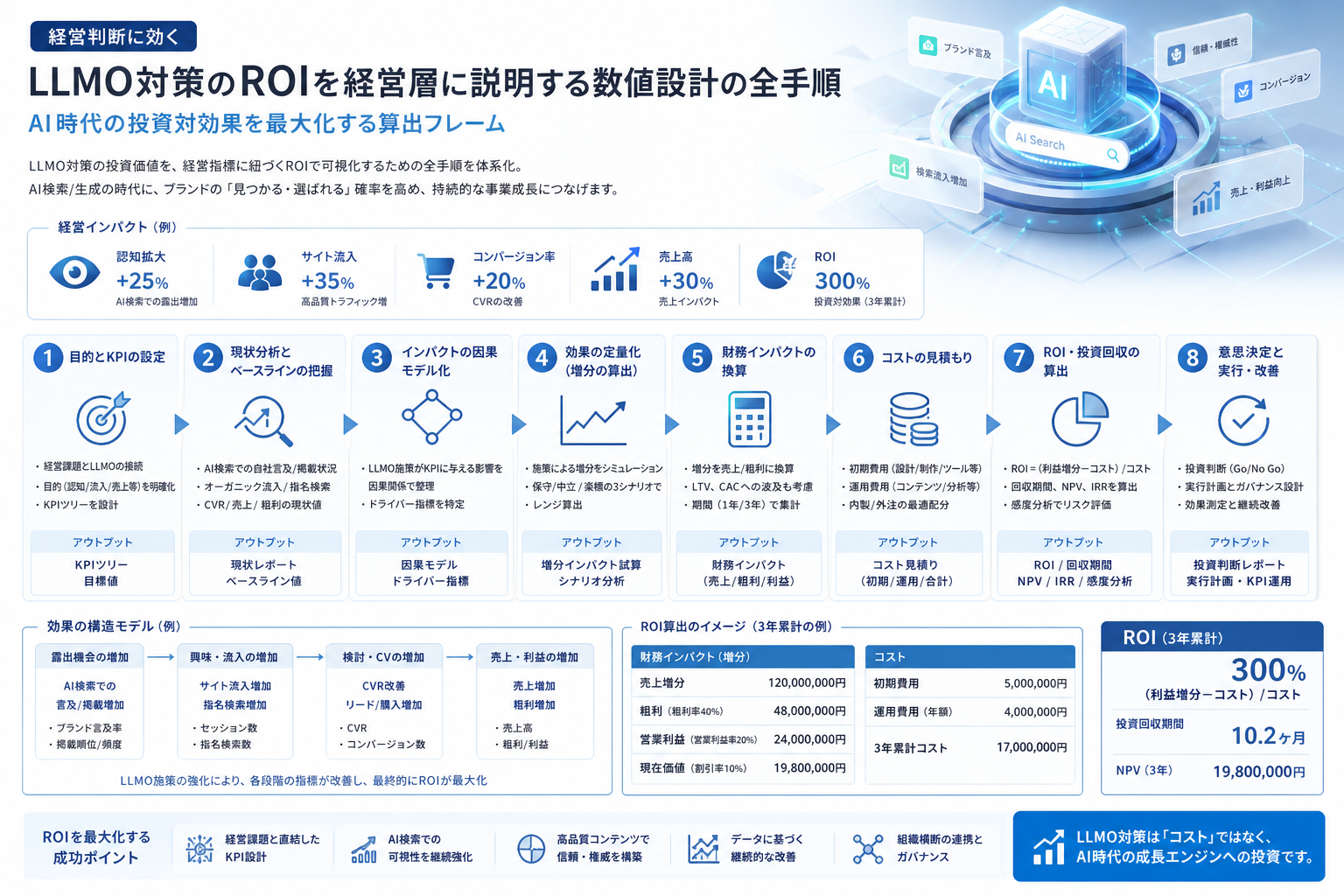
Complete Guide to Designing ROI Metrics for LLMO Strategies: Maximizing Investment Effectiveness in the AI Era

Complete Guide to Designing ROI Metrics for LLMO Strategies: Maximizing Investment Effectiveness in the AI Era

The ROI for LLMO measures combines profits from AI with the increase in branded searches. It outlines three scenarios—conservative, realistic, and optimistic—along with the payback period, detailing all steps for designing specific metrics to obtain approval from management.

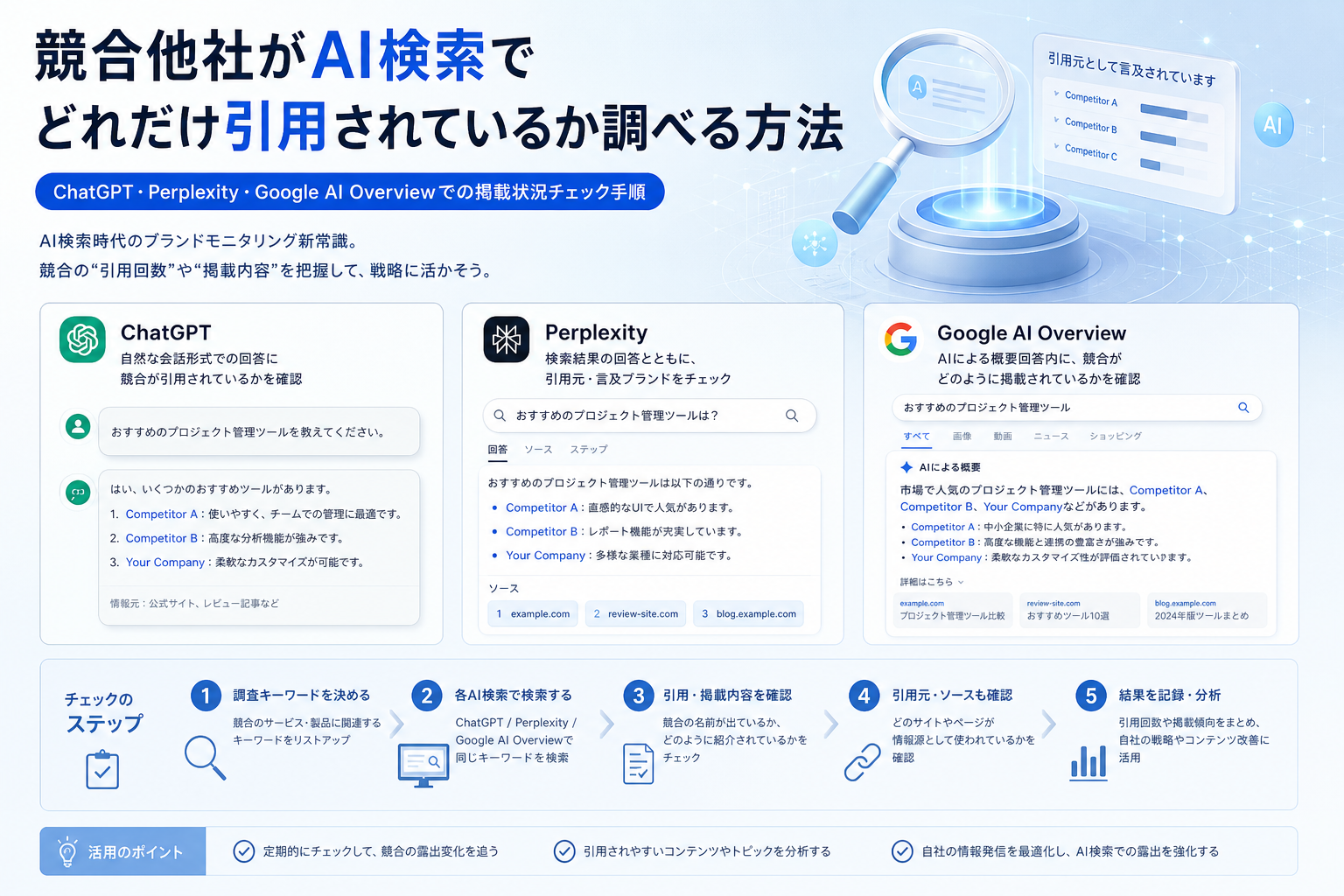
How to Check Competitors' AI Search Citations: Steps for Reviewing ChatGPT, Perplexity, and Google AI Coverage

How to Check Competitors' AI Search Citations: Steps for Reviewing ChatGPT, Perplexity, and Google AI Coverage

To check how often competitors are cited in AI searches, combine four steps: directly asking ChatGPT or Perplexity, searching in secret mode, utilizing APIs, and using dedicated tools.

Differences Between Length and Density of AI-Friendly Text: Characteristics of Citable Information Design

Differences Between Length and Density of AI-Friendly Text: Characteristics of Citable Information Design

For text that is easily cited by AI, the optimal length is within 73 characters per paragraph, with over 22 instances of numbers. This article explains specific information design criteria and improvement steps to be recognized as a primary source by AI searches, including structuring conclusions at the beginning and using question-based headings.

Differences Between Content Marketing and LLMO: Search Strategies and Marketing Tactics in the AI Era

Differences Between Content Marketing and LLMO: Search Strategies and Marketing Tactics in the AI Era

Content marketing and LLMO have different objectives and targets. This article explains a three-step optimization process that combines quality content, structuring, and brand monitoring. It also organizes the priorities for being cited by AI and the division of roles for search strategies.

What is AI Hallucination? Causes, Types, Risks of Misinformation, and Countermeasures Explained

What is AI Hallucination? Causes, Types, Risks of Misinformation, and Countermeasures Explained

AI hallucination refers to the phenomenon where generative AI confidently outputs information that is factually incorrect. This article systematically explains four strategies that companies can use to prevent the spread of misinformation, as well as the classification of internal and external factors and the causes of occurrence. It serves as a useful resource for foundational knowledge in risk management.

Can LLMO Provide an Advantage Over SEO for Small Businesses? Strategies for Competing with Major Players

Can LLMO Provide an Advantage Over SEO for Small Businesses? Strategies for Competing with Major Players

LLMO is a method aimed at targeting AI citations, and small to medium-sized enterprises with niche expertise have the potential to compete on equal footing with larger companies. Considering the market rates for initial diagnostics ranging from 100,000 to 1 million yen, the organization of structured data and llms.txt, as well as the expansion of primary information such as FAQs and case studies, it becomes crucial to implement a comprehensive information design that goes beyond mere SEO strategies, ensuring that AI recognizes them as "reliable sources of information."


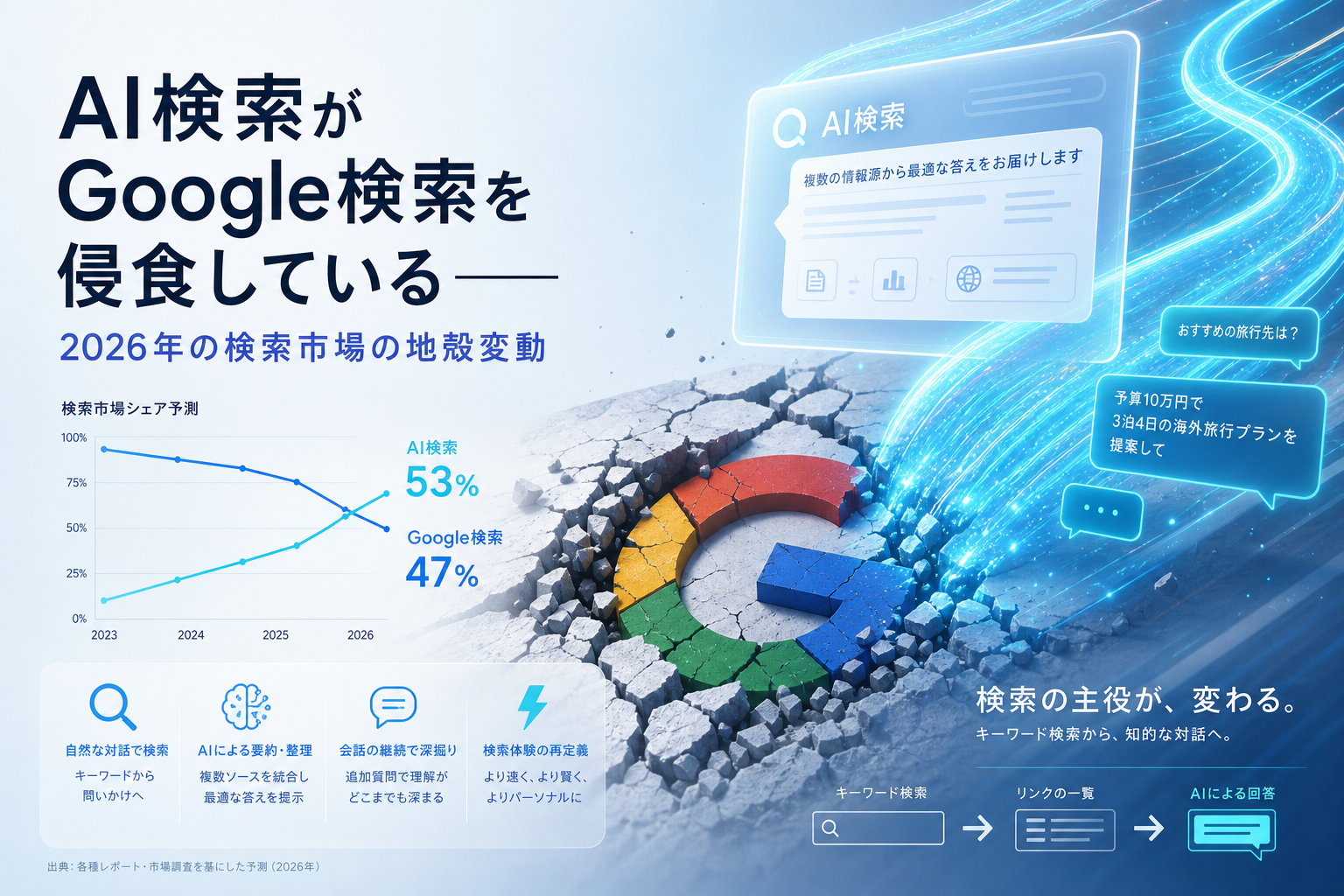
AI Search is Eroding Google Search: Tectonic Shifts in the 2026 Search Market

AI Search is Eroding Google Search: Tectonic Shifts in the 2026 Search Market

As of June 2026, AI search has maintained about 90% of Google's market share, with a clear division of use cases emerging. This article explains the structural changes based on the latest primary data, focusing on the transition of information retrieval queries to AI and Google's dominance in comparative research.

How to Create AI-Friendly Titles and Headlines: A Guide to Writing for AIO and LLMO Optimization

How to Create AI-Friendly Titles and Headlines: A Guide to Writing for AIO and LLMO Optimization

Titles that are easy for AI to reference should be in the form of questions, and headlines should prioritize conclusions. This article explains three key conditions for LLMs to recognize a page as a source of answers, as well as how to utilize structured data, providing specific points for optimizing content design for AI search engines.

Mastering AI Search with AIO and LLMO Strategies: A Comprehensive Guide to Differences, Methods, and Choosing the Right Company

Mastering AI Search with AIO and LLMO Strategies: A Comprehensive Guide to Differences, Methods, and Choosing the Right Company

AIO measures and LLMO measures are not the same. AIO targets the AI answer box in Google search, while LLMO focuses on getting citations from generative AI responses, leading to different optimization targets and strategies.

Conditions for Information Sources Cited in AI Search: Characteristics and Design of Content That is Easily Credited

Conditions for Information Sources Cited in AI Search: Characteristics and Design of Content That is Easily Credited

The difference between Queue Inc. and other LLMO countermeasure companies lies in its technology-driven approach, which reverses the RAG logic rather than starting from marketing. This article explains the structural design necessary for citation in AI searches, compares four different types, and outlines five key axes to consider during selection.

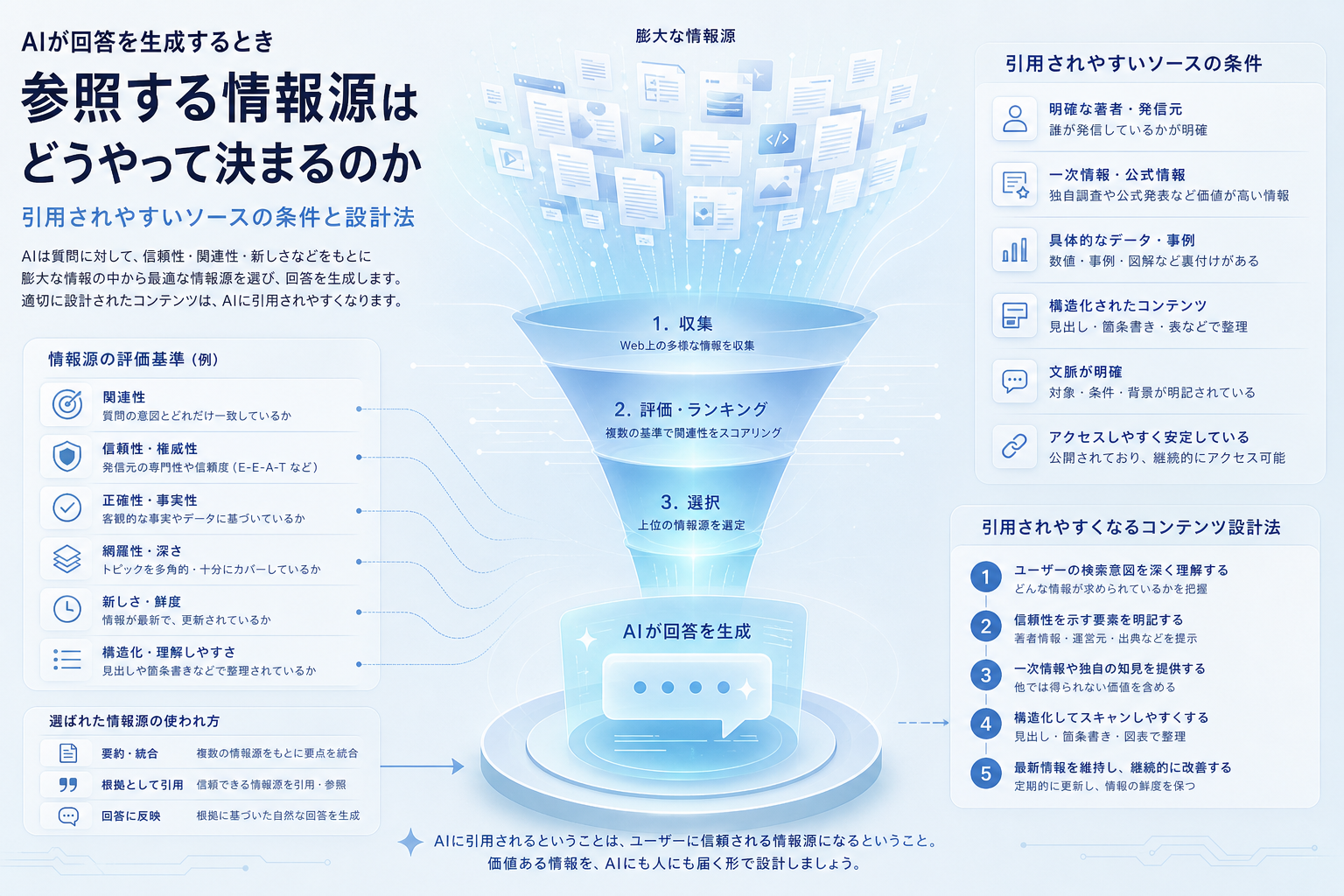
How AI Determines Information Sources for Generating Responses: Criteria and Design for Citable Sources

How AI Determines Information Sources for Generating Responses: Criteria and Design for Citable Sources

The sources that AI refers to when generating responses are determined by three mechanisms: web search, pre-training data, and RAG. This article explains the selection criteria for each method, how to design content that is easily cited with an awareness of E-E-A-T, and the importance of quantitative data.

How ChatGPT Learns: Understanding AI's Learning Process from Web Content

How ChatGPT Learns: Understanding AI's Learning Process from Web Content

ChatGPT becomes smarter through a three-step process involving the collection and formatting of vast amounts of data from the web, statistical learning to predict the next word, and human reinforcement learning (RLHF). This article explains the information structuring and learning processes that enable AI to be referenced.

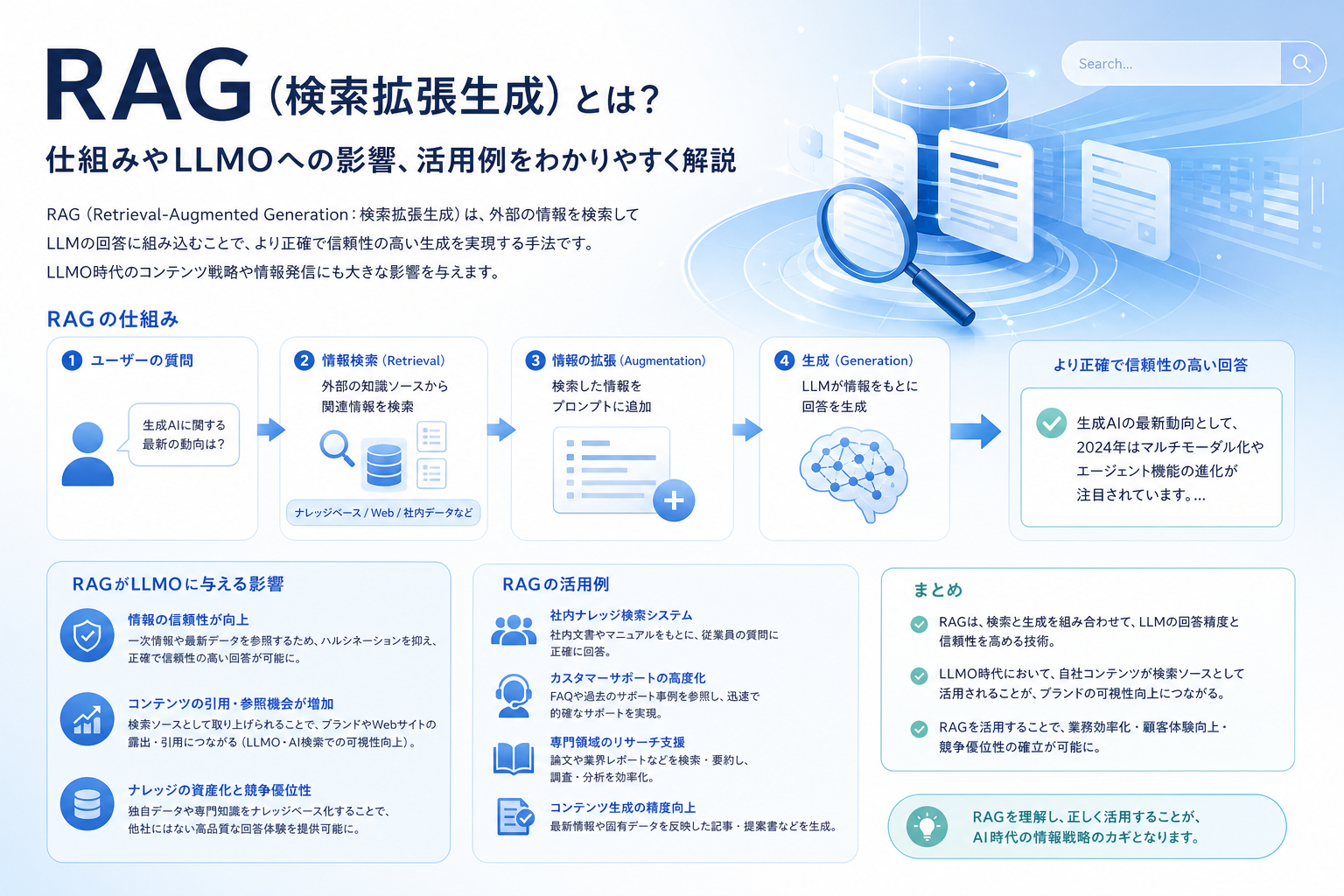
What is RAG (Retrieval-Augmented Generation)? A Clear Explanation of Its Mechanism, Impact on LLMs, and Use Cases

What is RAG (Retrieval-Augmented Generation)? A Clear Explanation of Its Mechanism, Impact on LLMs, and Use Cases

RAG (Retrieval-Augmented Generation) is a technology that enhances the accuracy of responses by allowing large language models (LLMs) to reference external data such as internal documents. This article systematically explains the three-step mechanism, the differences from fine-tuning, and the impact on improving citation rates in AI search, all from a practical perspective.

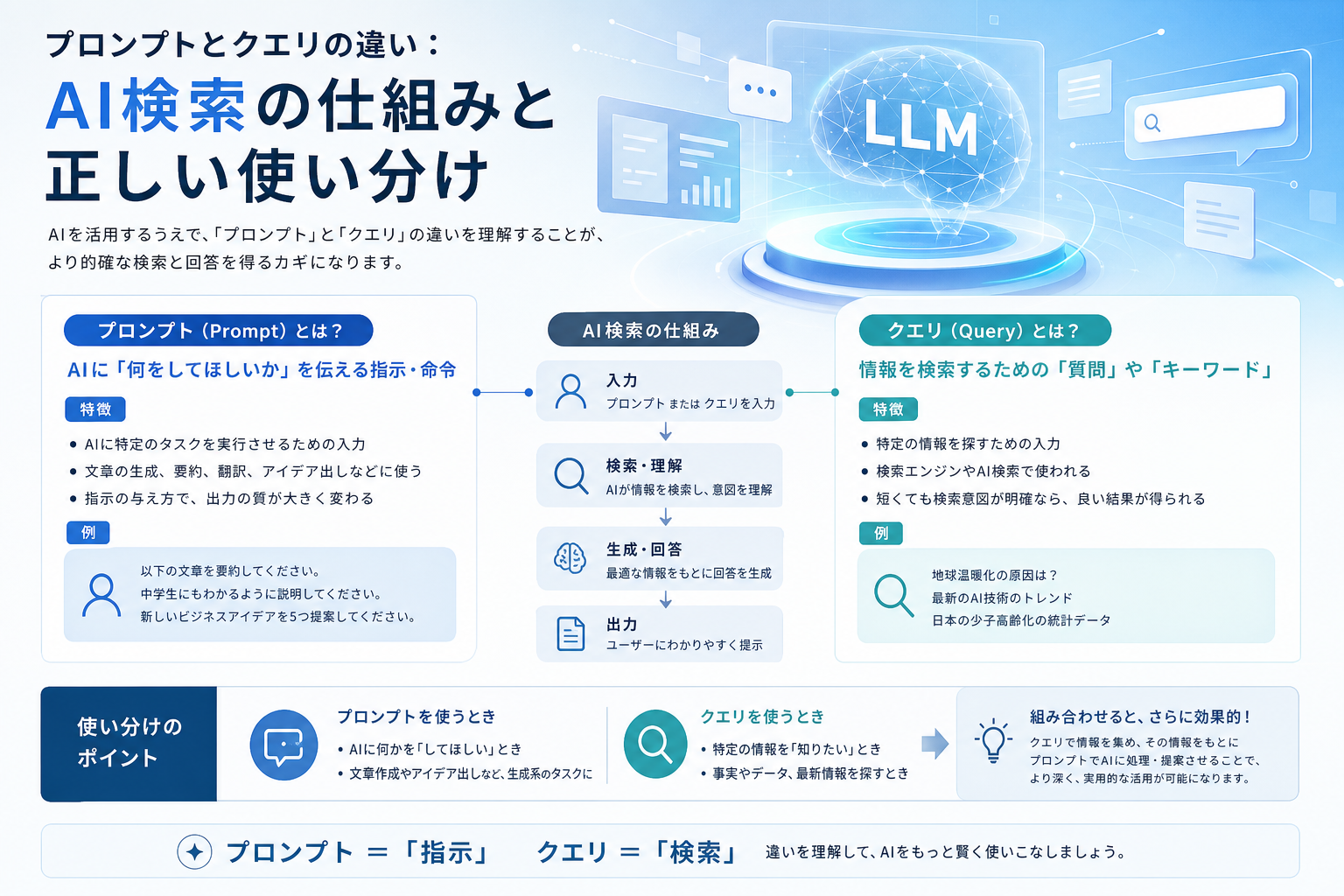
Difference Between Prompts and Queries: Understanding AI Search Mechanisms and Proper Usage

Difference Between Prompts and Queries: Understanding AI Search Mechanisms and Proper Usage

Prompts are instructions for AI, while queries are specific questions. By distinguishing between the two and clearly defining roles and conditions using the TPO method, the accuracy of responses can be improved. This article explains the correct differentiation and design points for AI search based on perspectives for the 2026 edition.

What is LLM? A Comprehensive Guide to Mechanisms and Applications for Marketers

What is LLM? A Comprehensive Guide to Mechanisms and Applications for Marketers

LLM is a foundational AI technology that learns from vast amounts of data to generate natural language. This article explains the mechanisms marketers should understand, the differences from generative AI, and three risks and countermeasures to consider in business applications. It systematically organizes criteria for improving prompt quality and operational rules.

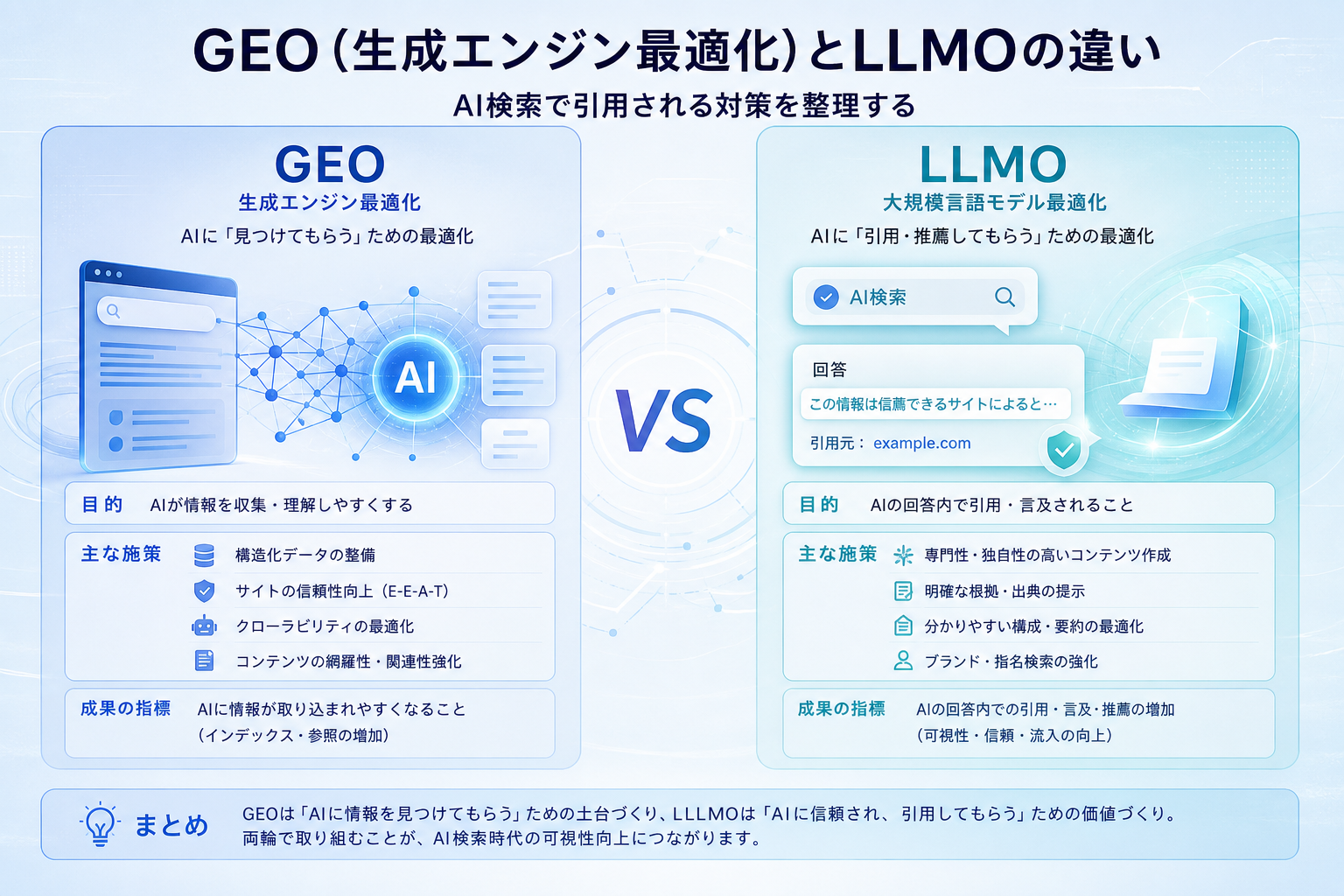
Differences Between GEO (Generation Engine Optimization) and LLMO: Organizing Strategies Cited in AI Search

Differences Between GEO (Generation Engine Optimization) and LLMO: Organizing Strategies Cited in AI Search

GEO focuses on the sources for AI searches, while LLMO targets recommended responses from AI models. This article explains brand strategies in the era of AI search, detailing specific measures utilizing primary information and white papers based on the differing roles of the two.

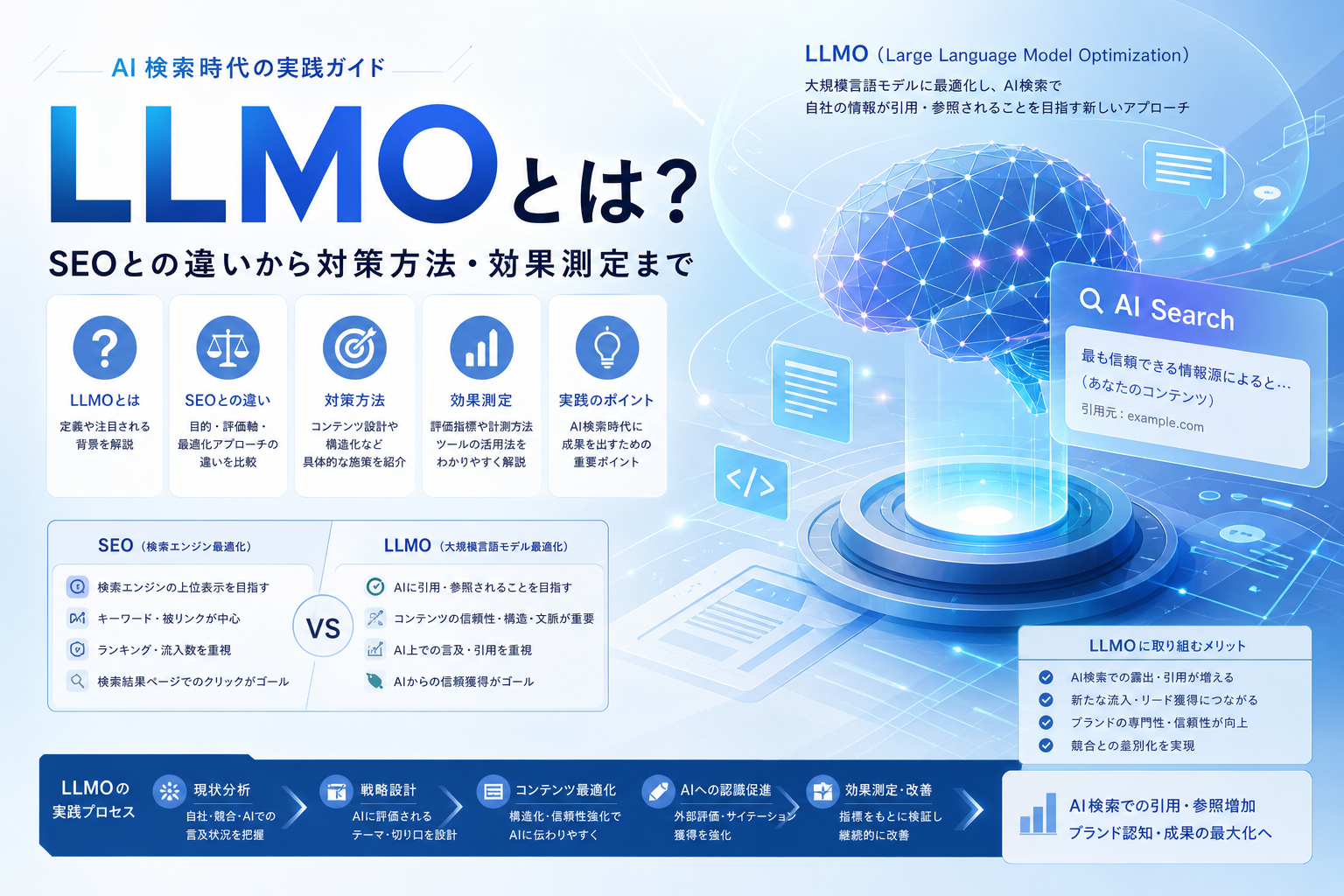
What is LLMO? A Practical Guide to SEO Differences, Countermeasures, and Effect Measurement in the AI Search Era

What is LLMO? A Practical Guide to SEO Differences, Countermeasures, and Effect Measurement in the AI Search Era

LLMO is an optimization strategy that allows generative AI to reference company information in its responses. This article explains the differences from SEO, common characteristics of content valued by AI, and a five-step approach for specific measures. It serves as a practical guide to being recommended as a trusted information source in the AI search era.

Becoming an AI-Recommended International School: Criteria for Choosing Schools in 2026

Becoming an AI-Recommended International School: Criteria for Choosing Schools in 2026

This article explains how international schools can effectively communicate information to be recommended by AI searches. It organizes four evaluation criteria: the official name of the curriculum, achievements in AI education, third-party evaluations, and multilingual support, and provides specific guidance on how to structure data for easy reference by AI.

Are e-Learning Service Case Studies Easily Cited in AI Searches? Conditions and Design Methods for Citable Case Articles

Are e-Learning Service Case Studies Easily Cited in AI Searches? Conditions and Design Methods for Citable Case Articles

Case studies of e-learning can be easily referenced in AI searches by structuring challenges and data. This article explains the conditions for case studies to be valued as primary information by AI, how to utilize Q&A to increase citation rates, and five strategies to maintain overall consistency across the site.

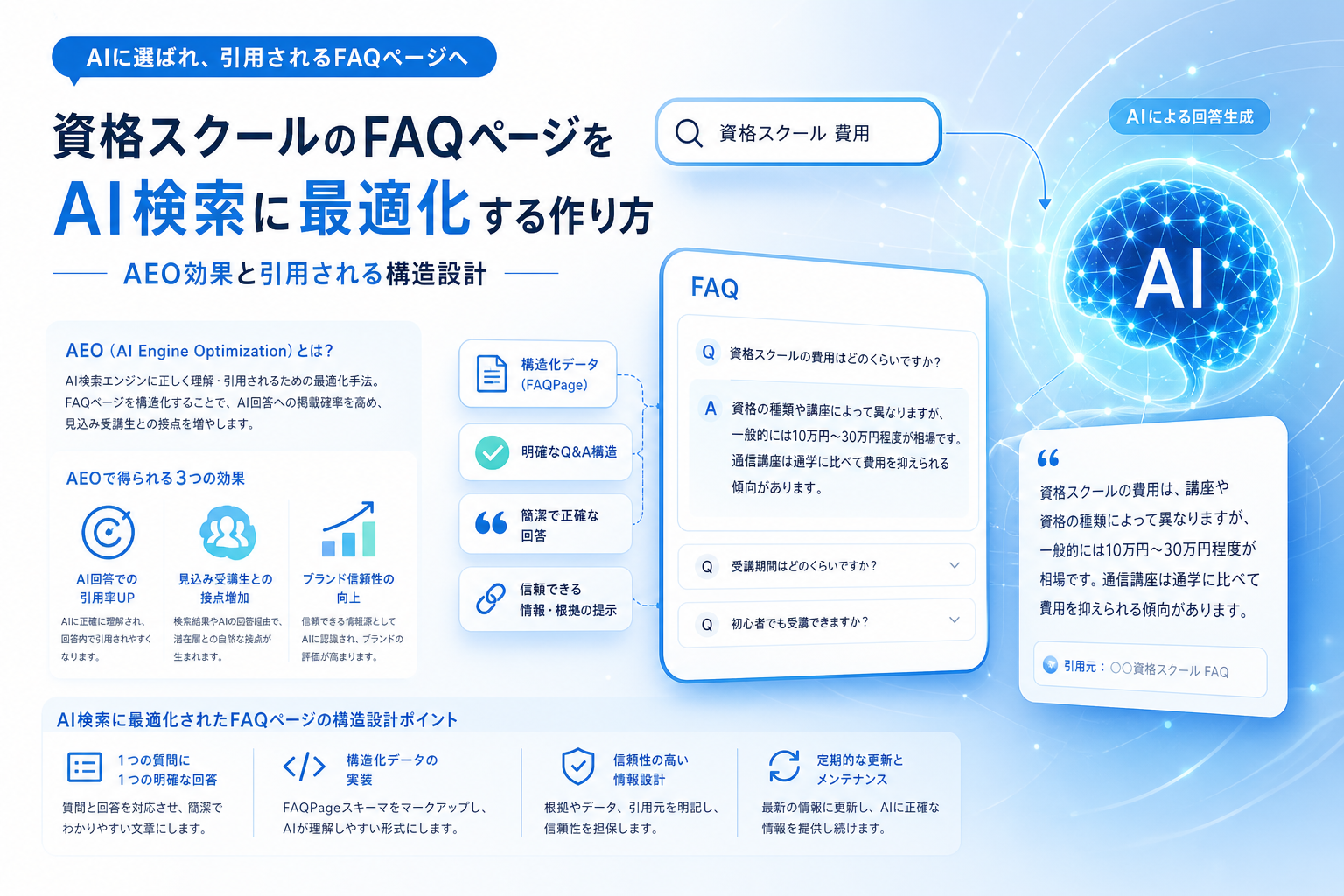
How to Optimize Your Qualification School's FAQ Page for AI Search: AEO Effects and Structural Design for Citations

How to Optimize Your Qualification School's FAQ Page for AI Search: AEO Effects and Structural Design for Citations

To optimize the FAQ of a certification school for AI search, it is essential to specify the questions, use a conclusion-first Q&A format, and implement the FAQPage schema.

How Administrative Scriveners Can Be Cited by AI in Local Queries: Practical Strategies for Choosing Location and Service Names

How Administrative Scriveners Can Be Cited by AI in Local Queries: Practical Strategies for Choosing Location and Service Names

For administrative scriveners to be cited in local searches like Google AI Overview, it is essential to have consistent NAP information on GBP and to publish primary information.

Essential Pages for Labor and Social Security Attorney Offices: Designing a Site That Stands Out in AI Searches

Essential Pages for Labor and Social Security Attorney Offices: Designing a Site That Stands Out in AI Searches

To be chosen by AI search, a labor and social security attorney office must have an information design centered around three elements: service pages categorized by consultation topics, expert profiles, and FAQs. This article explains in five steps the importance of implementing structured data to encourage AI citations and highlights key points for showcasing concrete achievements to enhance credibility.

How to Create a Law Firm Website That Stands Out in AI Searches: 6 Practical Strategies for the AI Era

How to Create a Law Firm Website That Stands Out in AI Searches: 6 Practical Strategies for the AI Era

For a law firm to be cited in AI searches, it's crucial to structure expert information and develop region-specific Q&A. In the YMYL (Your Money or Your Life) domain, we explain six specific strategies to increase citation rates, including acquiring reviews and implementing a two-layer site strategy.

YMYL Strategies and AI Search Optimization for Professional Services Websites: A Practical Guide to Strengthening E-E-A-T, Implementing Structured Data, and Complying with Advertising Regulations

YMYL Strategies and AI Search Optimization for Professional Services Websites: A Practical Guide to Strengthening E-E-A-T, Implementing Structured Data, and Complying with Advertising Regulations

A guide for professional service websites to comply with YMYL regulations and be favored in AI searches. It explains a checklist of 14 items to enhance AI citation rates, including Person schema and FAQ structured data. The guide covers specific steps to make expertise machine-readable while adhering to advertising regulations.