LLMO & AI Search Optimization Articles

Brand Search (Branded Search) x LLMO Strategies: Building Brands for the AI Search Era

Brand Search (Branded Search) x LLMO Strategies: Building Brands for the AI Search Era

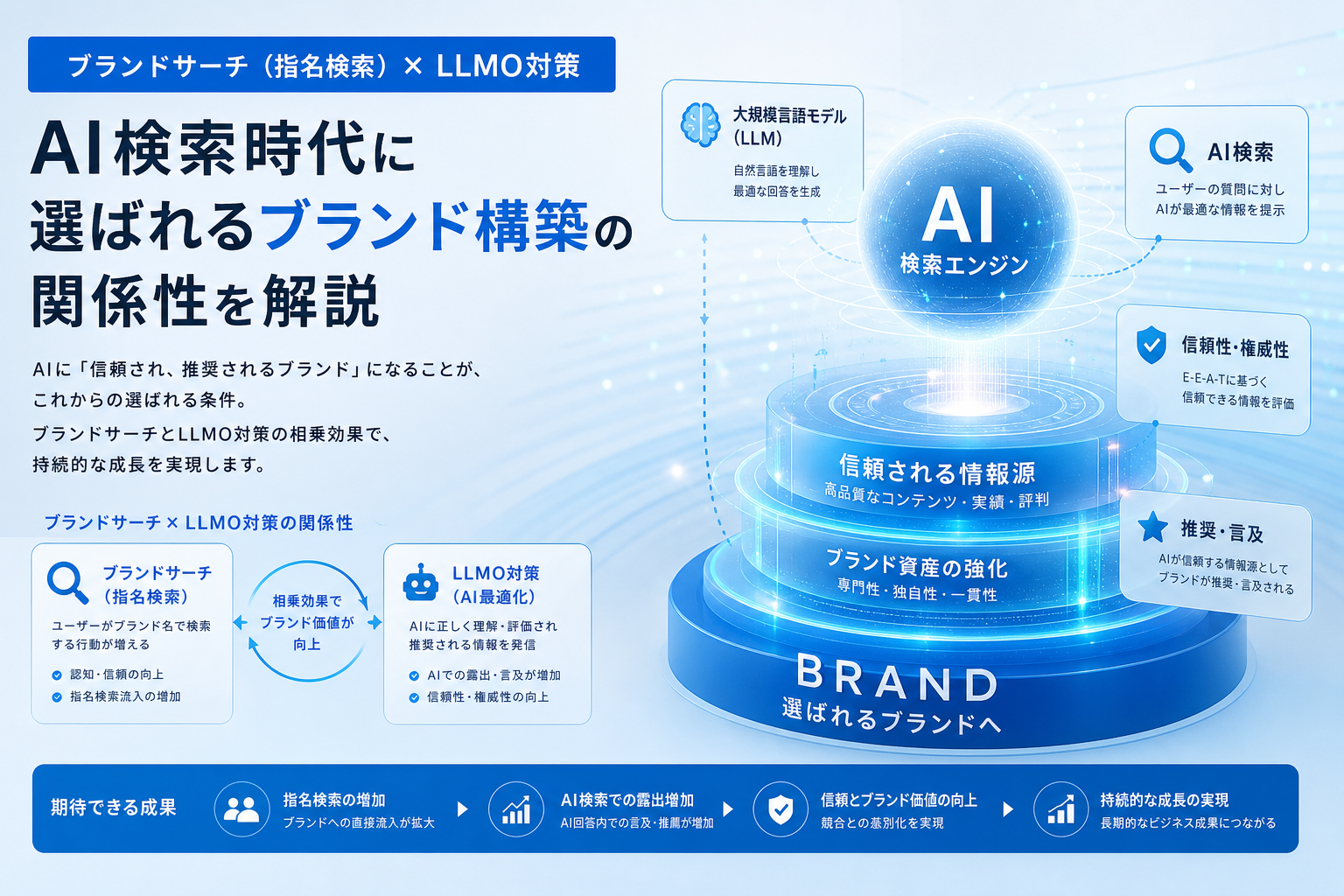
Brand search (branded search) and LLMO strategies mutually reinforce each other. This article explains four practical steps, from understanding the current situation to measuring effectiveness, to encourage AI recommendations and increase branded searches.

Complete Guide to MEO Strategies for the AI Search Era: Boosting Customer Attraction by Integrating LLMO and Local Search

Complete Guide to MEO Strategies for the AI Search Era: Boosting Customer Attraction by Integrating LLMO and Local Search

In the era of AI search, MEO strategies are shifting from ranking improvement to the selection of citations for AI responses. Based on the accurate operation of GBP, we explain four integrated measures: structured data, Q&A, reviews, and E-E-A-T.

How to Measure AI Citation Rates: Steps and Insights for Winning in AI Search

How to Measure AI Citation Rates: Steps and Insights for Winning in AI Search

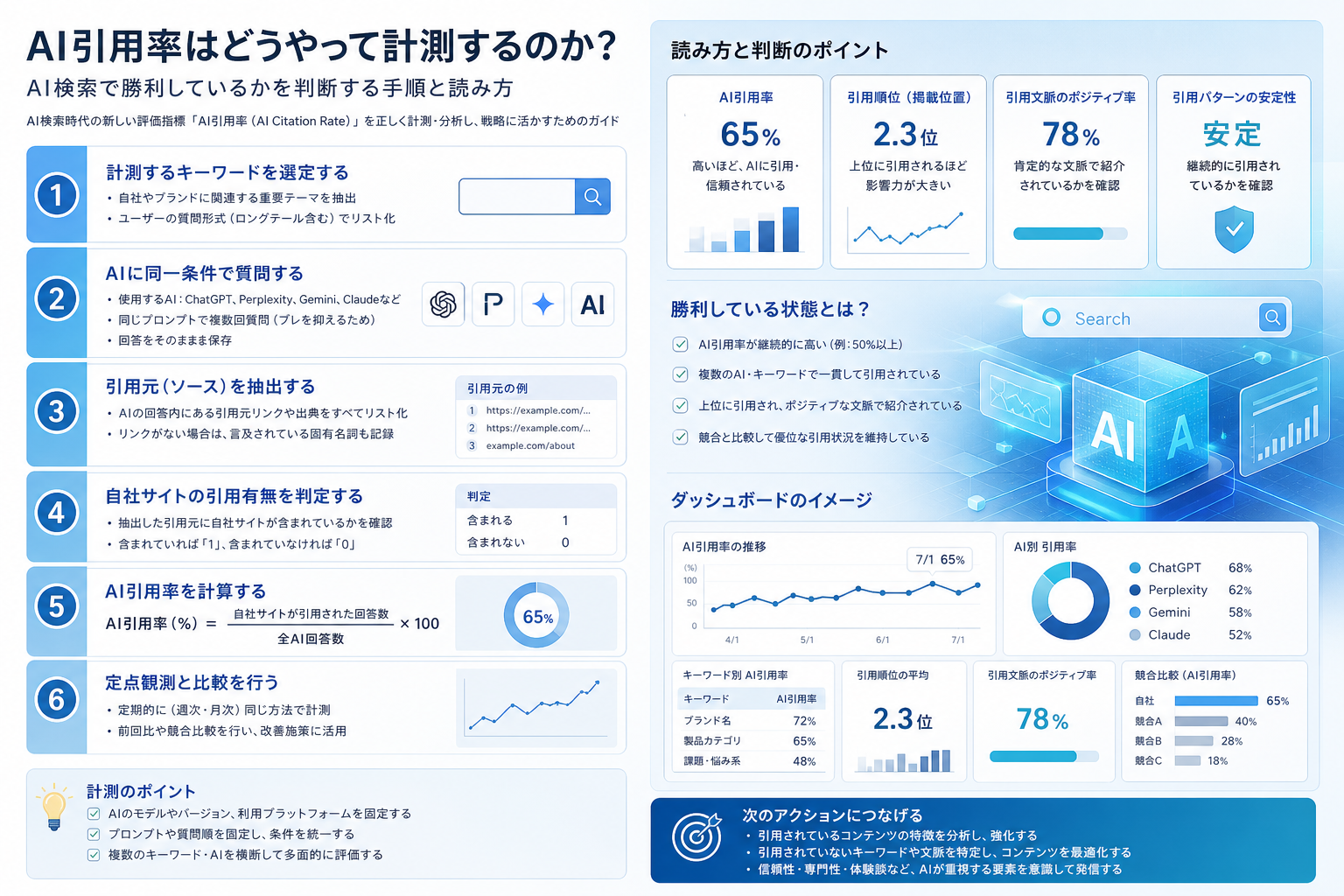
The citation rate for AI searches is measured through three axes: dedicated tools, manual scoring, and GA4 analysis. This article comprehensively explains the methods for calculating citation counts relative to the total number of questions, as well as KPI benchmarks for the first year, outlining the necessary steps for effective measurement in the era of AI searches.

Recommended AEO Consulting Comparison: Key Points and Criteria for Choosing Between Queue and LANY by Type

Recommended AEO Consulting Comparison: Key Points and Criteria for Choosing Between Queue and LANY by Type

This article explains key points for comparing Queue and LANY in AEO consulting. It organizes the selection of the right partner for your company based on five comparison axes, including the technical AI mechanisms, visualization of citation rates, and integration with SEO assets.

Comparing LLMO Consulting: 5 Recommended Patterns and Selection Tips for Queue and CyberAgent

Comparing LLMO Consulting: 5 Recommended Patterns and Selection Tips for Queue and CyberAgent

This article explains five key points to consider when comparing LLMO Consulting with CyberAgent. It organizes criteria for selecting a partner based on your company's goals, such as prioritizing citation acquisition through AI search or promoting advertising production DX.

Comparing LLMO Consulting with Dentsu Digital: Choosing Tips and Recommended Patterns by Key Focus Areas

Comparing LLMO Consulting with Dentsu Digital: Choosing Tips and Recommended Patterns by Key Focus Areas

Comparing Queue and Dentsu Digital in LLMO consulting: If you prioritize technical implementation and citation visualization, Queue is the better choice. For comprehensive marketing and large-scale campaigns, Dentsu Digital is more suitable.

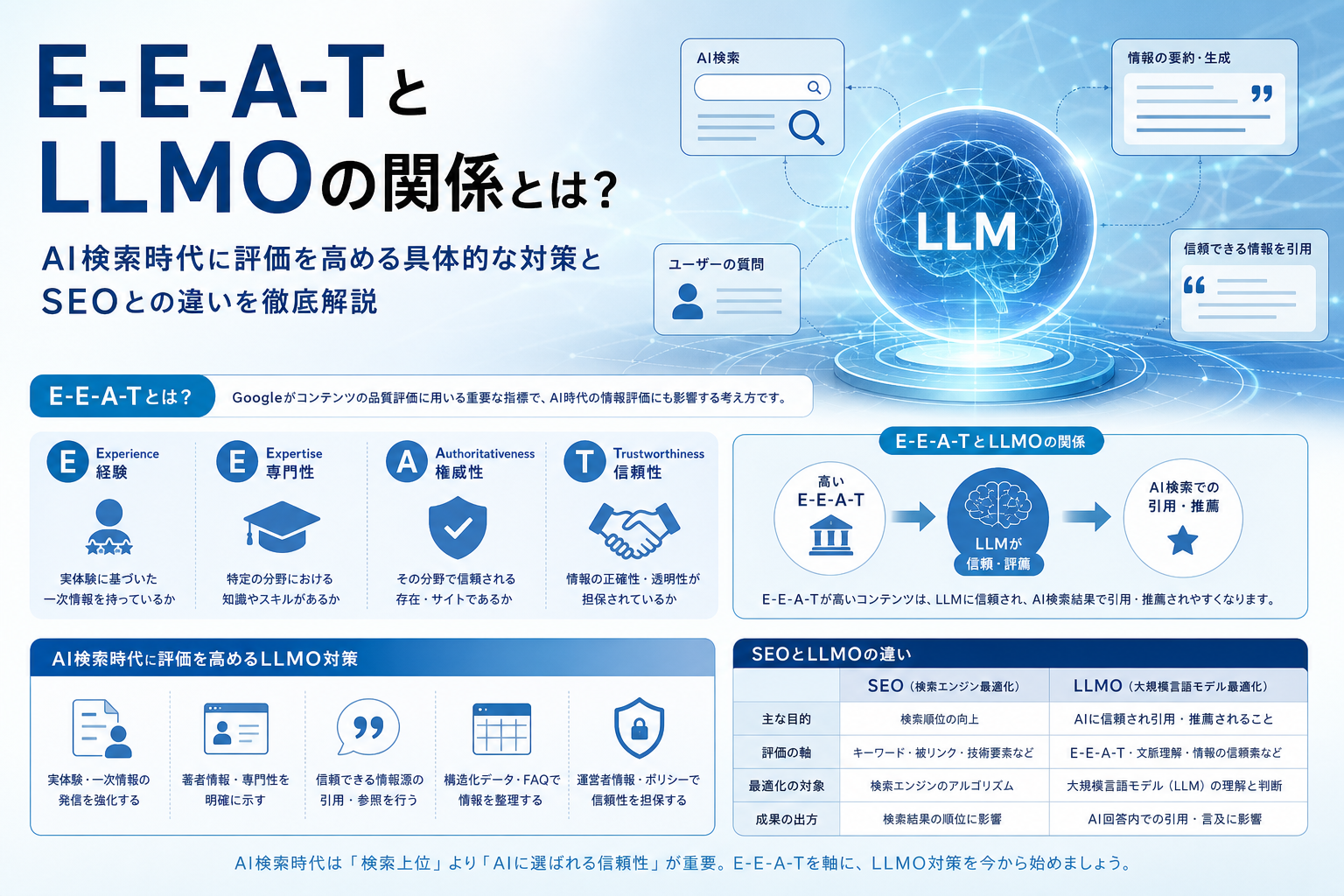
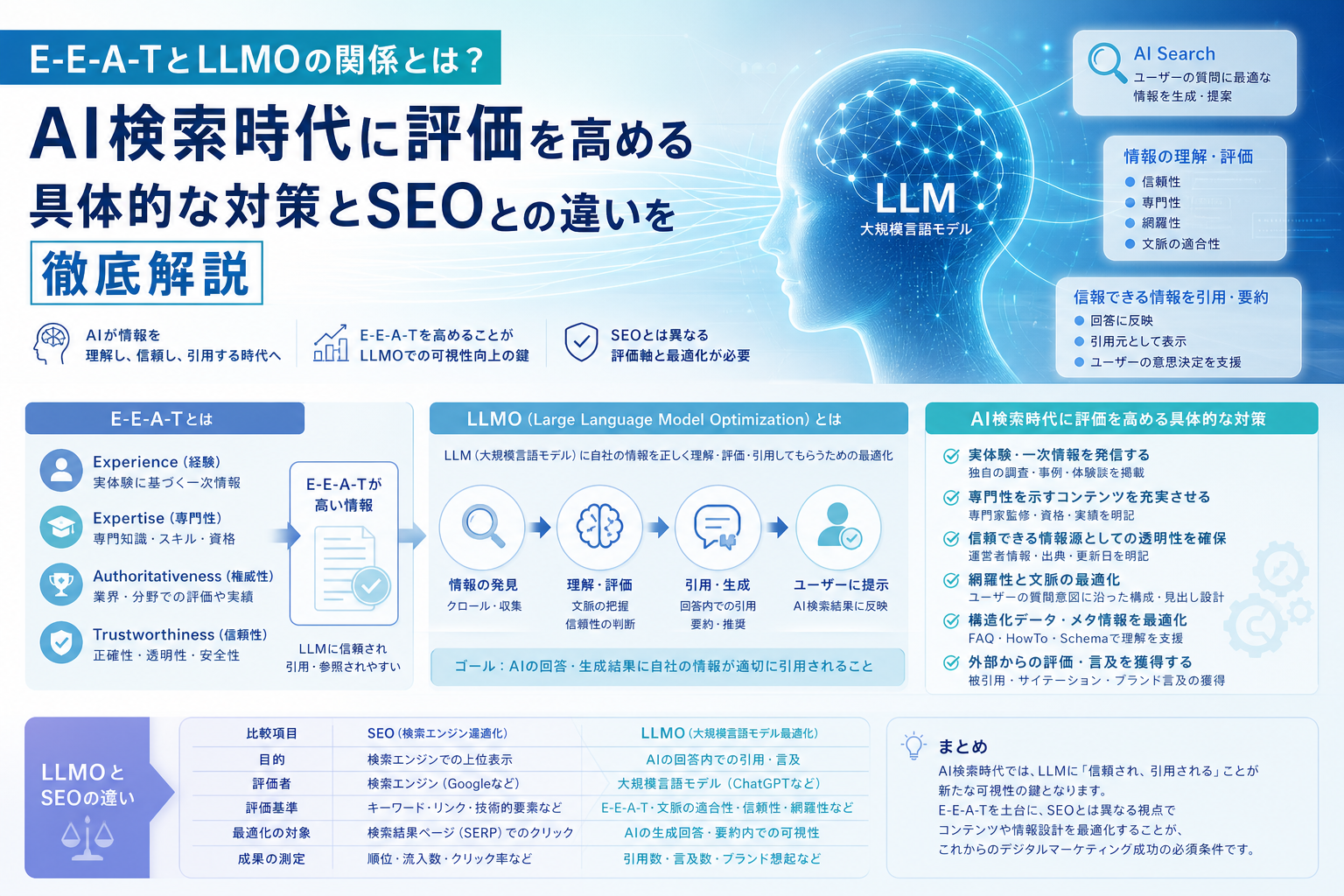
The Relationship Between E-E-A-T and LLMO: Comprehensive Strategies to Enhance Evaluation in the AI Search Era and Differences from SEO

The Relationship Between E-E-A-T and LLMO: Comprehensive Strategies to Enhance Evaluation in the AI Search Era and Differences from SEO

E-E-A-T will continue to be a core criterion for citation judgment in AI search in 2026. This includes the accumulation of primary information and the use of structured data, focusing on major engines like ChatGPT and Perplexity.

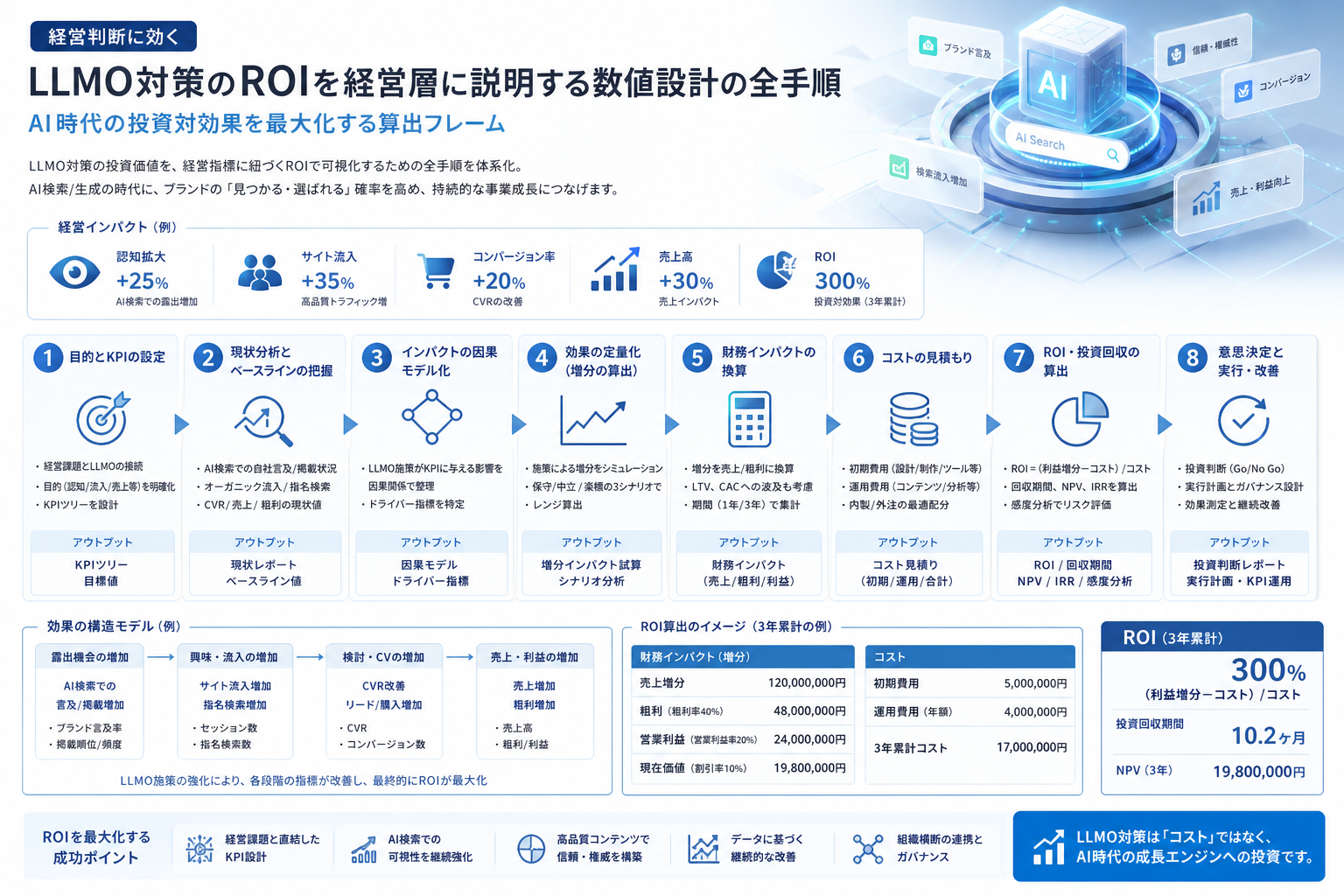
Complete Guide to Designing ROI Metrics for LLMO Strategies: Maximizing Investment Effectiveness in the AI Era

Complete Guide to Designing ROI Metrics for LLMO Strategies: Maximizing Investment Effectiveness in the AI Era

The ROI for LLMO measures combines profits from AI with the increase in branded searches. It outlines three scenarios—conservative, realistic, and optimistic—along with the payback period, detailing all steps for designing specific metrics to obtain approval from management.

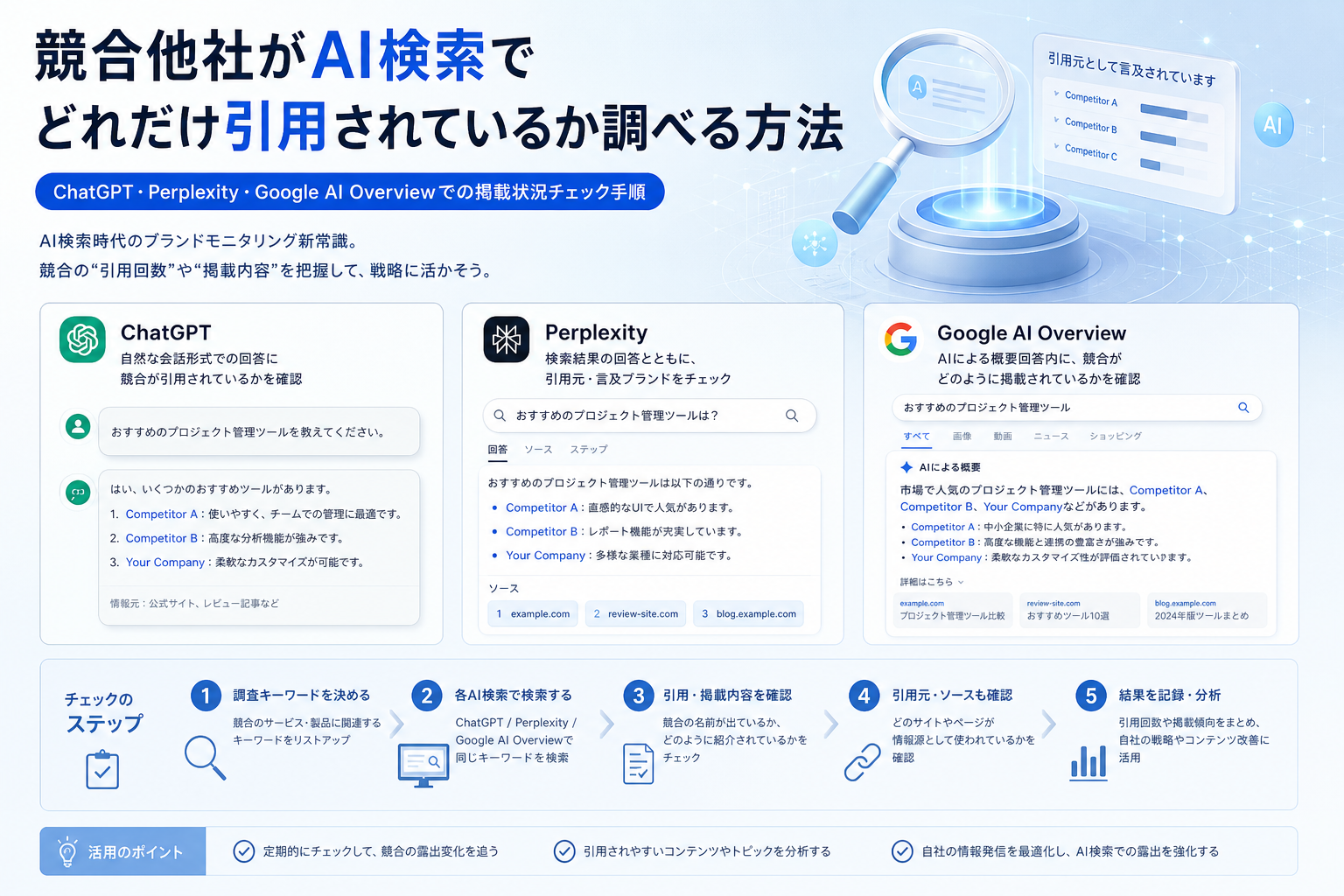
How to Check Competitors' AI Search Citations: Steps for Reviewing ChatGPT, Perplexity, and Google AI Coverage

How to Check Competitors' AI Search Citations: Steps for Reviewing ChatGPT, Perplexity, and Google AI Coverage

To check how often competitors are cited in AI searches, combine four steps: directly asking ChatGPT or Perplexity, searching in secret mode, utilizing APIs, and using dedicated tools.

Differences Between Length and Density of AI-Friendly Text: Characteristics of Citable Information Design

Differences Between Length and Density of AI-Friendly Text: Characteristics of Citable Information Design

For text that is easily cited by AI, the optimal length is within 73 characters per paragraph, with over 22 instances of numbers. This article explains specific information design criteria and improvement steps to be recognized as a primary source by AI searches, including structuring conclusions at the beginning and using question-based headings.

Comparing Queue and Digital Identity in LLMO Consulting: Choosing Based on Key Focus Points and AI Search Optimization Criteria

Comparing Queue and Digital Identity in LLMO Consulting: Choosing Based on Key Focus Points and AI Search Optimization Criteria

When considering Queue and Digital Identity for LLMO consulting, the decision often hinges on whether to prioritize a technology-driven approach or comprehensive marketing capabilities. This article organizes the strengths of both companies and their perspectives on AI search optimization into five categories, providing criteria for selecting the most suitable partner for your business.

When in Doubt with LLMO Consulting: Comparing Queue and Media Reach by SEO Foundation and Purpose

When in Doubt with LLMO Consulting: Comparing Queue and Media Reach by SEO Foundation and Purpose

We will compare Queue and media reach using five criteria to help you decide which to choose for LLMO consulting. We have organized optimal selection criteria based on different objectives, such as wanting to make your company website the primary source of AI information or prioritizing brand awareness.

Comparing Queue and Geocode in LLMO Consulting: Selection Criteria and Cost Overview

Comparing Queue and Geocode in LLMO Consulting: Selection Criteria and Cost Overview

This article compares whether to choose Queue or Geocode in LLMO consulting based on five different patterns according to prioritized KPIs. It organizes selection criteria and cost estimates tailored to your company's objectives, focusing on reliability, CV improvement, technical integration, and more.

Choosing Between Queue and Faber Company: A Comparative Guide to LLMO Consulting Firms Based on Key Considerations

Choosing Between Queue and Faber Company: A Comparative Guide to LLMO Consulting Firms Based on Key Considerations

This article compares Queue and Faber Company based on five key points: technology, content, analysis, budget, and brand protection, to help you decide which LLMO consultant to choose.

Comparing LLMO Consulting's Queue and PLAN-B: Key Points for Choosing Wisely

Comparing LLMO Consulting's Queue and PLAN-B: Key Points for Choosing Wisely

When comparing Queue and PLAN-B in LLMO consulting, the selection criteria of whether to focus on a technology-driven approach or an integrated public relations strategy is crucial. This involves emphasizing the technical approach that prioritizes citation acquisition through AI search, versus a brand strategy that integrates SEO, PR, and social media.

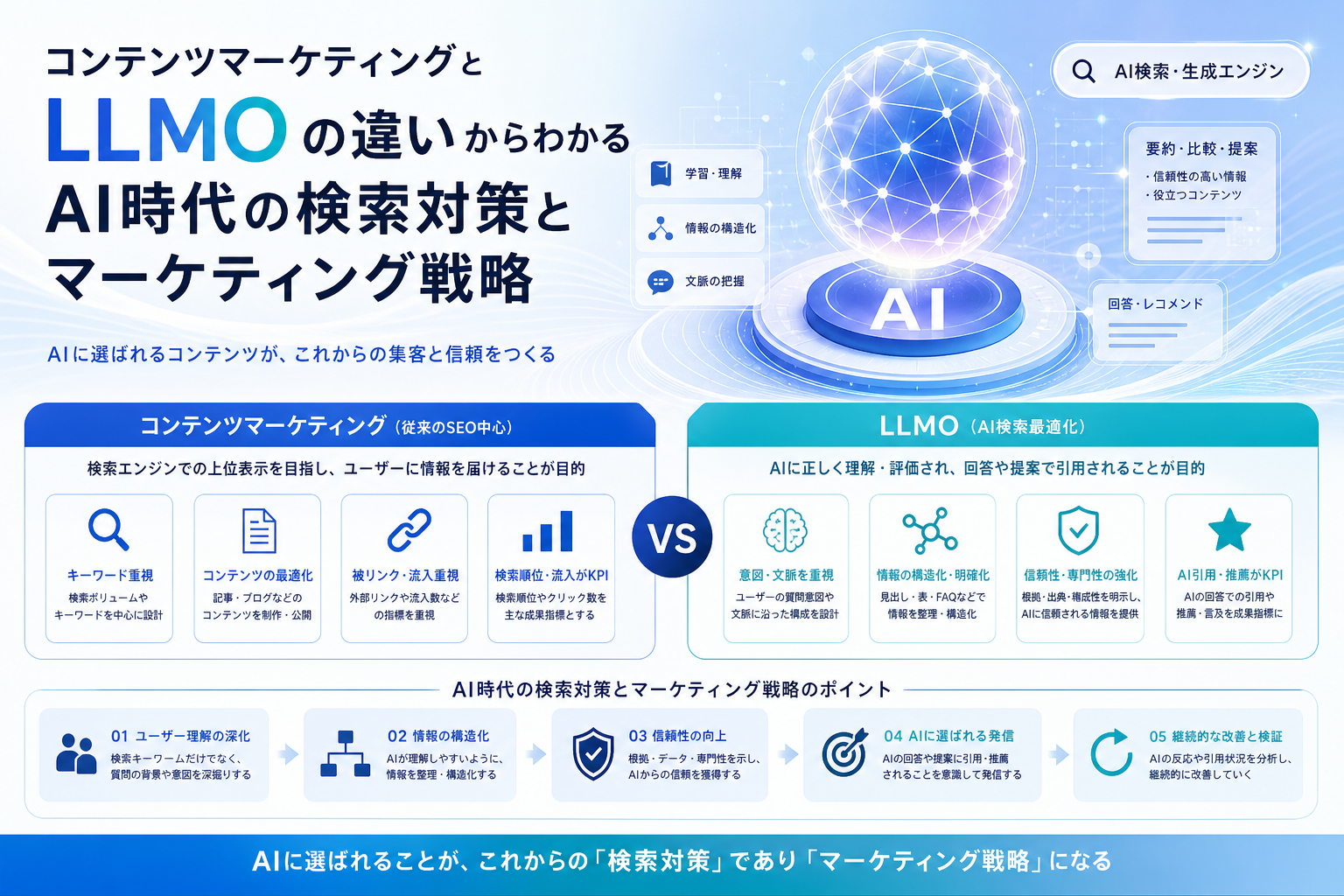
Differences Between Content Marketing and LLMO: Search Strategies and Marketing Tactics in the AI Era

Differences Between Content Marketing and LLMO: Search Strategies and Marketing Tactics in the AI Era

Content marketing and LLMO have different objectives and targets. This article explains a three-step optimization process that combines quality content, structuring, and brand monitoring. It also organizes the priorities for being cited by AI and the division of roles for search strategies.

What is AI Hallucination? Causes, Types, Risks of Misinformation, and Countermeasures Explained

What is AI Hallucination? Causes, Types, Risks of Misinformation, and Countermeasures Explained

AI hallucination refers to the phenomenon where generative AI confidently outputs information that is factually incorrect. This article systematically explains four strategies that companies can use to prevent the spread of misinformation, as well as the classification of internal and external factors and the causes of occurrence. It serves as a useful resource for foundational knowledge in risk management.

Can LLMO Provide an Advantage Over SEO for Small Businesses? Strategies for Competing with Major Players

Can LLMO Provide an Advantage Over SEO for Small Businesses? Strategies for Competing with Major Players

LLMO is a method aimed at targeting AI citations, and small to medium-sized enterprises with niche expertise have the potential to compete on equal footing with larger companies. Considering the market rates for initial diagnostics ranging from 100,000 to 1 million yen, the organization of structured data and llms.txt, as well as the expansion of primary information such as FAQs and case studies, it becomes crucial to implement a comprehensive information design that goes beyond mere SEO strategies, ensuring that AI recognizes them as "reliable sources of information."


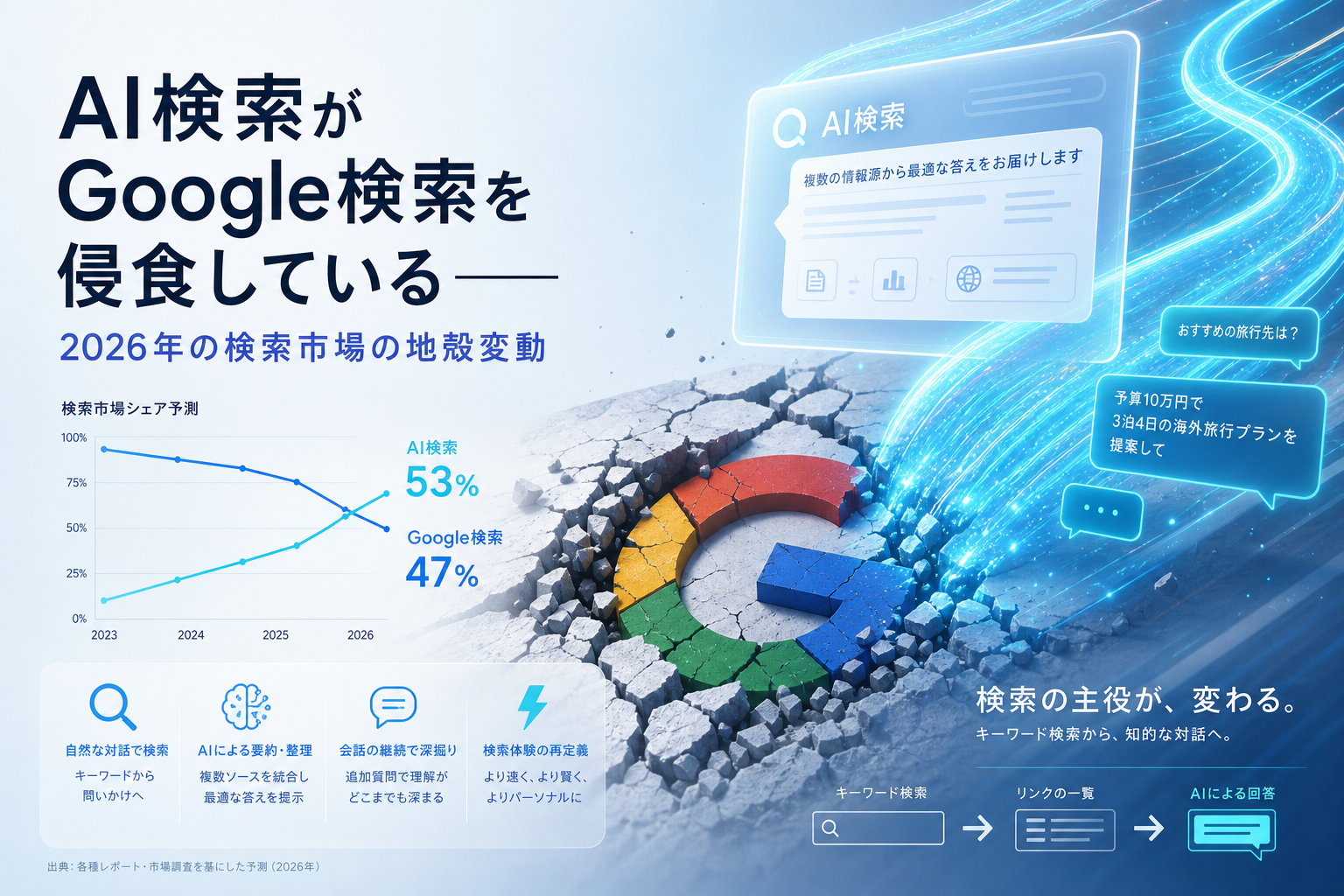
AI Search is Eroding Google Search: Tectonic Shifts in the 2026 Search Market

AI Search is Eroding Google Search: Tectonic Shifts in the 2026 Search Market

As of June 2026, AI search has maintained about 90% of Google's market share, with a clear division of use cases emerging. This article explains the structural changes based on the latest primary data, focusing on the transition of information retrieval queries to AI and Google's dominance in comparative research.

How to Create AI-Friendly Titles and Headlines: A Guide to Writing for AIO and LLMO Optimization

How to Create AI-Friendly Titles and Headlines: A Guide to Writing for AIO and LLMO Optimization

Titles that are easy for AI to reference should be in the form of questions, and headlines should prioritize conclusions. This article explains three key conditions for LLMs to recognize a page as a source of answers, as well as how to utilize structured data, providing specific points for optimizing content design for AI search engines.

Mastering AI Search with AIO and LLMO Strategies: A Comprehensive Guide to Differences, Methods, and Choosing the Right Company

Mastering AI Search with AIO and LLMO Strategies: A Comprehensive Guide to Differences, Methods, and Choosing the Right Company

AIO measures and LLMO measures are not the same. AIO targets the AI answer box in Google search, while LLMO focuses on getting citations from generative AI responses, leading to different optimization targets and strategies.

Conditions for Information Sources Cited in AI Search: Characteristics and Design of Content That is Easily Credited

Conditions for Information Sources Cited in AI Search: Characteristics and Design of Content That is Easily Credited

The difference between Queue Inc. and other LLMO countermeasure companies lies in its technology-driven approach, which reverses the RAG logic rather than starting from marketing. This article explains the structural design necessary for citation in AI searches, compares four different types, and outlines five key axes to consider during selection.

How AI Determines Information Sources for Generating Responses: Criteria and Design for Citable Sources

How AI Determines Information Sources for Generating Responses: Criteria and Design for Citable Sources

The sources that AI refers to when generating responses are determined by three mechanisms: web search, pre-training data, and RAG. This article explains the selection criteria for each method, how to design content that is easily cited with an awareness of E-E-A-T, and the importance of quantitative data.

What is LLMO? Understanding AI Era Search Strategies Through Its Etymology and Definition Changes

What is LLMO? Understanding AI Era Search Strategies Through Its Etymology and Definition Changes

LLMO (Large Language Model Optimization) is a marketing method that emerged during the AI search era from 2024 to 2025. This article systematically organizes the background of its evolution from an initial definition focused on technology operations to the creation of information sources referenced by AI, as well as the differences in objectives compared to SEO.

How ChatGPT Learns: Understanding AI's Learning Process from Web Content

How ChatGPT Learns: Understanding AI's Learning Process from Web Content

ChatGPT becomes smarter through a three-step process involving the collection and formatting of vast amounts of data from the web, statistical learning to predict the next word, and human reinforcement learning (RLHF). This article explains the information structuring and learning processes that enable AI to be referenced.

What is RAG (Retrieval-Augmented Generation)? A Clear Explanation of Its Mechanism, Impact on LLMs, and Use Cases

What is RAG (Retrieval-Augmented Generation)? A Clear Explanation of Its Mechanism, Impact on LLMs, and Use Cases

RAG (Retrieval-Augmented Generation) is a technology that enhances the accuracy of responses by allowing large language models (LLMs) to reference external data such as internal documents. This article systematically explains the three-step mechanism, the differences from fine-tuning, and the impact on improving citation rates in AI search, all from a practical perspective.

Difference Between Prompts and Queries: Understanding AI Search Mechanisms and Proper Usage

Difference Between Prompts and Queries: Understanding AI Search Mechanisms and Proper Usage

Prompts are instructions for AI, while queries are specific questions. By distinguishing between the two and clearly defining roles and conditions using the TPO method, the accuracy of responses can be improved. This article explains the correct differentiation and design points for AI search based on perspectives for the 2026 edition.

What is LLM? A Comprehensive Guide to Mechanisms and Applications for Marketers

What is LLM? A Comprehensive Guide to Mechanisms and Applications for Marketers

LLM is a foundational AI technology that learns from vast amounts of data to generate natural language. This article explains the mechanisms marketers should understand, the differences from generative AI, and three risks and countermeasures to consider in business applications. It systematically organizes criteria for improving prompt quality and operational rules.

Differences Between AI Engines and Search Engines: Comparison of Mechanisms and Applications

Differences Between AI Engines and Search Engines: Comparison of Mechanisms and Applications

The fundamental difference between AI engines and search engines lies in their roles: one searches for and presents information, while the other summarizes and generates answers. This article compares their mechanisms and benefits, outlining criteria for effectively distinguishing their use for verifying primary information and improving work efficiency.

Differences Between GEO (Generation Engine Optimization) and LLMO: Organizing Strategies Cited in AI Search

Differences Between GEO (Generation Engine Optimization) and LLMO: Organizing Strategies Cited in AI Search

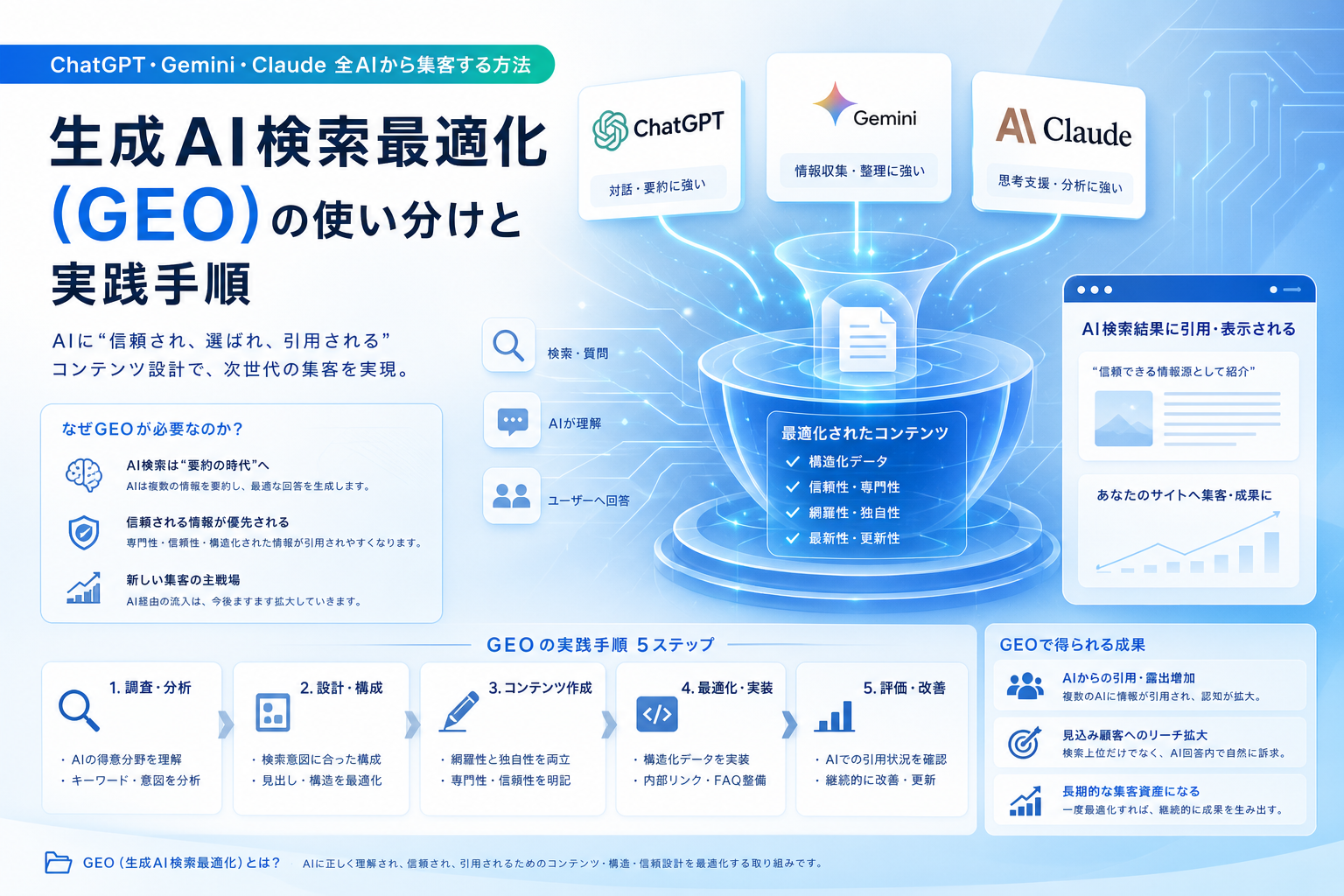
GEO focuses on the sources for AI searches, while LLMO targets recommended responses from AI models. This article explains brand strategies in the era of AI search, detailing specific measures utilizing primary information and white papers based on the differing roles of the two.

What is LLMO? A Practical Guide to SEO Differences, Countermeasures, and Effect Measurement in the AI Search Era

What is LLMO? A Practical Guide to SEO Differences, Countermeasures, and Effect Measurement in the AI Search Era

LLMO is an optimization strategy that allows generative AI to reference company information in its responses. This article explains the differences from SEO, common characteristics of content valued by AI, and a five-step approach for specific measures. It serves as a practical guide to being recommended as a trusted information source in the AI search era.

Becoming an AI-Recommended International School: Criteria for Choosing Schools in 2026

Becoming an AI-Recommended International School: Criteria for Choosing Schools in 2026

This article explains how international schools can effectively communicate information to be recommended by AI searches. It organizes four evaluation criteria: the official name of the curriculum, achievements in AI education, third-party evaluations, and multilingual support, and provides specific guidance on how to structure data for easy reference by AI.

Are e-Learning Service Case Studies Easily Cited in AI Searches? Conditions and Design Methods for Citable Case Articles

Are e-Learning Service Case Studies Easily Cited in AI Searches? Conditions and Design Methods for Citable Case Articles

Case studies of e-learning can be easily referenced in AI searches by structuring challenges and data. This article explains the conditions for case studies to be valued as primary information by AI, how to utilize Q&A to increase citation rates, and five strategies to maintain overall consistency across the site.